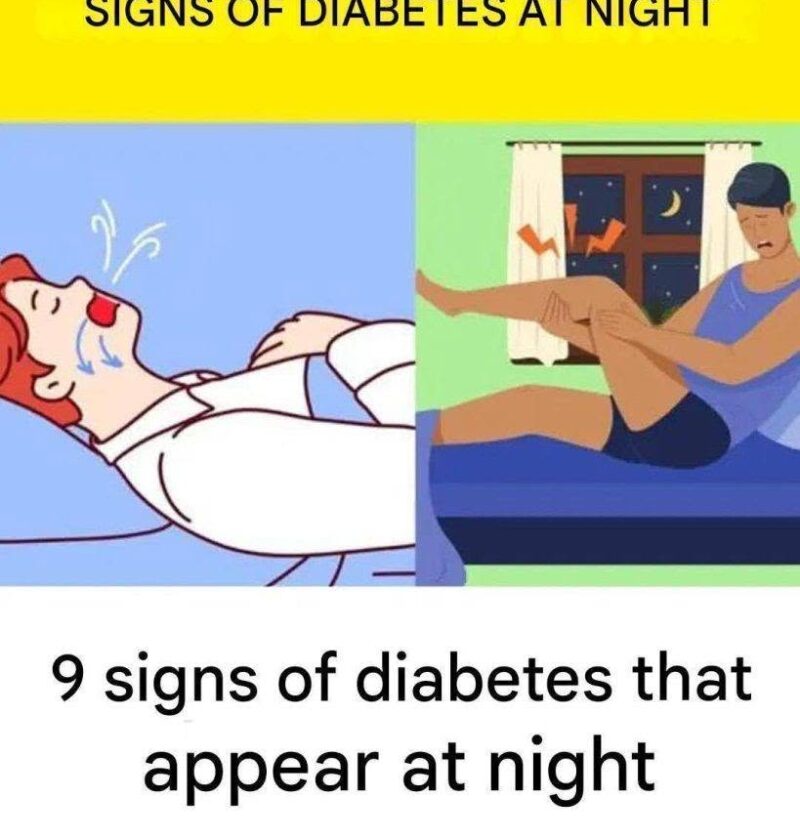
9 Signs of Diabetes That May Appear at Night
There isn’t a special set of symptoms that occurs only at night, but diabetes can become more noticeable overnight because you aren’t distracted by daytime activities. Frequent nighttime urination and excessive thirst are particularly important clues. (NIDDK)
🌙 9 possible nighttime signs
1. Waking up repeatedly to urinate 🚽
High blood glucose can cause increased urination, including during the night. But nighttime urination can also have many other causes. (NIDDK)
2. Unusual thirst or a dry mouth 💧
If you’re repeatedly waking up desperately thirsty or needing water, high blood glucose is one possible explanation. (CDC)
3. Night sweats
Heavy nighttime sweating can occur with low blood glucose, particularly in people taking insulin or certain diabetes medicines. (NIDDK)
4. Nightmares or restless sleep
Low blood glucose during sleep can cause nightmares, unusual behavior or disrupted sleep. (NIDDK)
5. Waking up shaky, hungry or with a racing heartbeat
These can be symptoms of hypoglycemia. (NIDDK)
6. Morning headache or feeling confused
Overnight low blood glucose can leave someone tired, irritable, confused or with a headache after waking. (NIDDK)
7. Persistent fatigue during the day
If poor sleep is accompanied by fatigue, diabetes may be one possible contributor. Fatigue is a recognized symptom of diabetes. (NIDDK)
8. Blurred vision 👁️
High blood glucose can cause blurry vision. Persistent or recurrent changes should be evaluated rather than assumed to be diabetes. (NIDDK)
9. Tingling or numbness in the feet
Diabetes-related nerve damage can cause numbness, tingling or pain in the feet and hands. (NIDDK)
⚠️ Don’t diagnose diabetes from symptoms alone
Many people with type 2 diabetes have few or no symptoms, especially early on. The only reliable way to determine whether you have diabetes or prediabetes is appropriate blood testing, such as an HbA1c or fasting glucose test. (NIDDK)
And remember: waking up to urinate isn’t automatically diabetes—it can also result from medications, urinary problems, enlarged prostate, sleep apnea, kidney disease and other conditions. (NIDDK)
Bottom line: Repeated nighttime thirst and urination are worth checking, while night sweats, nightmares, shakiness and confusion can be particularly important in someone already taking diabetes medication because they may indicate low blood sugar.
If someone with diabetes becomes severely confused, has a seizure, loses consciousness, or cannot safely swallow, severe hypoglycemia is a medical emergency. (NIDDK)