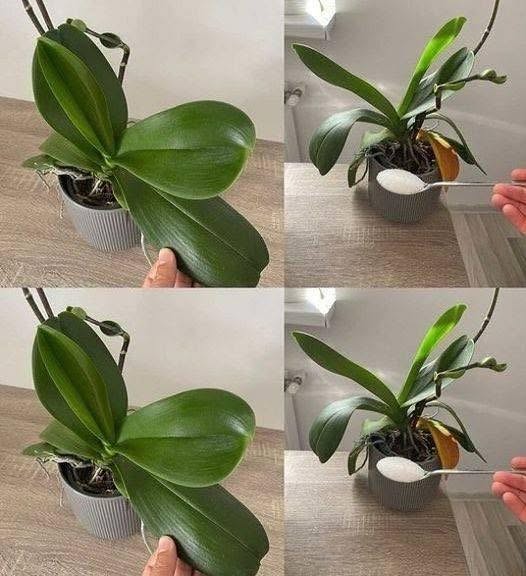
Orchids: “Just 1 Tablespoon and They Will Bloom Non-Stop” — Does It Really Work? 🌸
You may have seen the viral gardening tip promising that one tablespoon of a homemade fertilizer will make an orchid bloom continuously. The reality is more nuanced: there is no one-tablespoon miracle fertilizer that guarantees nonstop flowers.
For orchids, especially common Phalaenopsis (moth orchids), flowering depends much more on overall plant health, light, temperature, watering, and the plant’s natural flowering cues. The American Orchid Society notes that fertilizer is actually one of the less important factors in triggering flowering.
🌱 What Actually Encourages More Blooms?
1. Give it bright, indirect light
An east-facing window is often excellent for Phalaenopsis. Too little light can result in healthy-looking leaves but poor flowering.
2. Don’t overwater
Water thoroughly, then allow the potting medium to become nearly dry before watering again. Never leave the roots sitting in stagnant water.
3. Use diluted orchid fertilizer
A balanced orchid fertilizer can support healthy growth. The key is dilution and consistency, not a large dose. Orchid roots can be damaged by excessive fertilizer salts.
4. Give Phalaenopsis a temperature cue
Several weeks of cooler nighttime temperatures—around 55°F (13°C) can help initiate flower spikes in many Phalaenopsis orchids.
5. Keep the plant healthy
Pests, disease, poor roots, insufficient light, or inadequate stored energy can all prevent flowering.