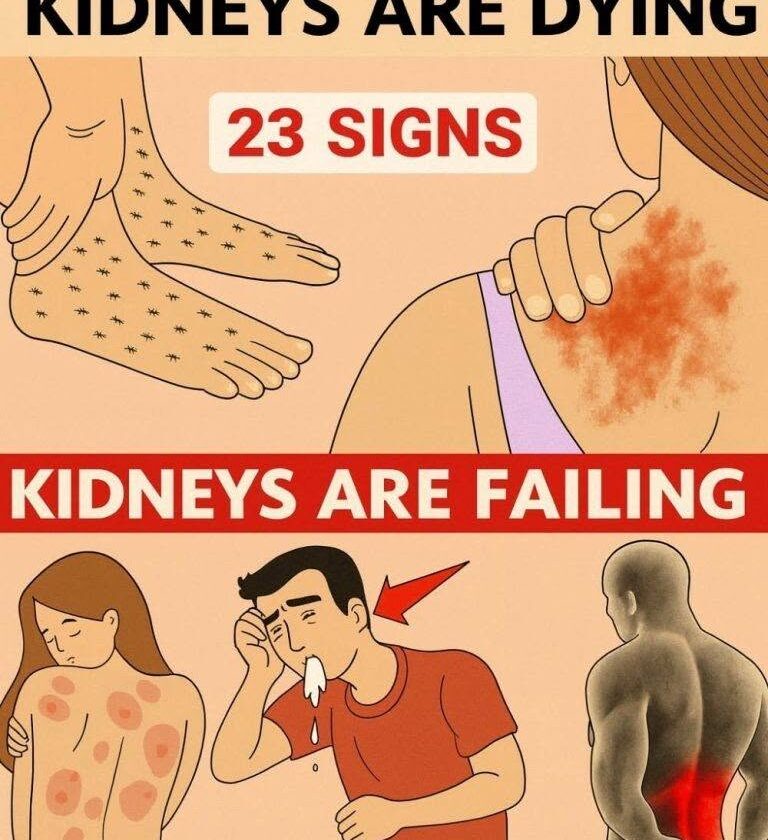
23 Strange Signs Your Kidneys Might Be in Trouble
Kidney disease is often called a “silent” condition because early kidney damage frequently causes no noticeable symptoms. That means symptoms alone aren’t a reliable way to determine whether your kidneys are healthy. Blood and urine tests are much more useful.
Still, as kidney function becomes impaired, several changes can appear:
- Swollen ankles or feet
- Puffy eyes, particularly in the morning
- Foamy or unusually bubbly urine
- Urinating more often, especially at night
- A noticeable decrease in urine
- Blood or unusually dark urine
- Persistent fatigue
- Difficulty concentrating
- Trouble sleeping
- Muscle cramps, particularly at night
- Muscle weakness
- Numbness or tingling
- Persistent itchy skin
- Very dry skin
- Loss of appetite
- Nausea
- Vomiting
- Unintentional weight loss
- Shortness of breath
- Chest discomfort
- Headaches
- Changes in taste
- Confusion or memory problems
Many of these symptoms are nonspecific and can occur with numerous other conditions. They become more common as kidney disease becomes advanced.
🧪 The most important point: test, don’t guess
If you have diabetes, high blood pressure, heart disease, or a family history of kidney failure, you’re at increased risk and should discuss kidney testing with your healthcare professional.
Two important tests are:
- eGFR: a blood test that estimates how well your kidneys filter blood.
- Urine albumin-to-creatinine ratio (uACR): detects abnormal protein leakage into the urine.
Early kidney disease can exist without any symptoms, so normal-looking urine or feeling well doesn’t necessarily mean everything is fine.