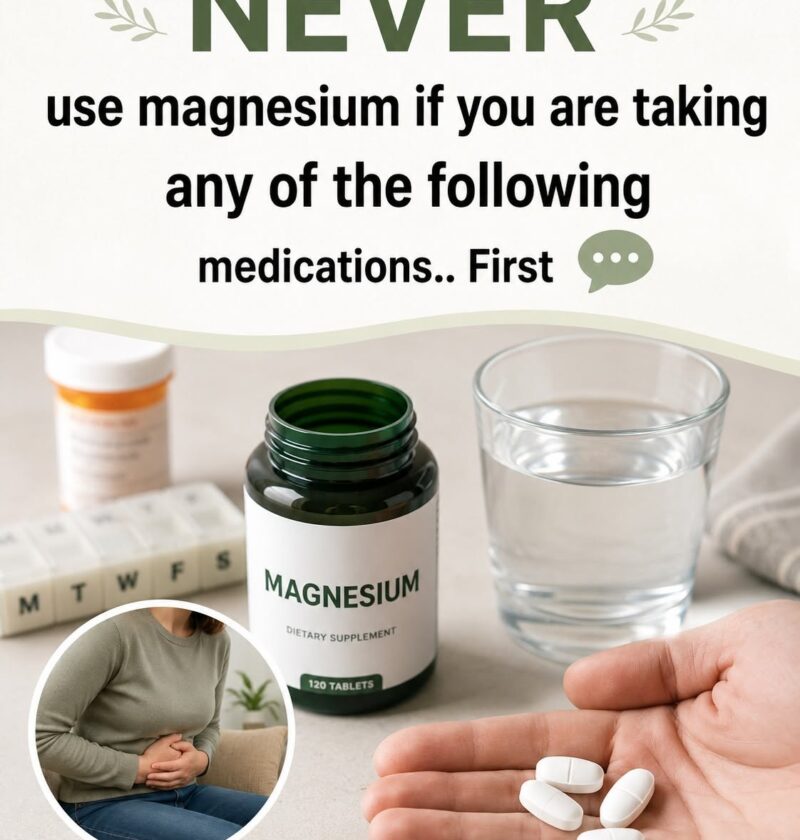
“Never Use Magnesium With These Medicines” — What’s Actually True?
The headline is too absolute. Magnesium supplements can interact with certain medicines, but that doesn’t mean everyone taking those medicines must avoid magnesium completely. The interaction is often about timing or absorption.
Medicines that deserve special attention
1. Certain antibiotics
Magnesium can bind to doxycycline and other tetracyclines, as well as ciprofloxacin and levofloxacin, reducing their absorption. These medicines generally need to be separated from magnesium by several hours.
2. Oral bisphosphonates
Medicines such as alendronate can be absorbed less effectively if taken too close to magnesium. NIH guidance recommends separating them by at least 2 hours.
3. Diuretics (“water pills”)
Some diuretics can increase magnesium loss through urine, while others can reduce magnesium loss. This is a reason to discuss supplementation with your healthcare professional rather than automatically avoiding it.
4. Long-term proton-pump inhibitors (PPIs)
Medicines such as omeprazole, esomeprazole, and lansoprazole can themselves contribute to low magnesium levels when used long-term.
5. High-dose zinc supplements
Very large amounts of zinc can interfere with magnesium absorption and regulation.
🫘 Magnesium from food is different
For most healthy people, magnesium naturally present in foods such as nuts, seeds, beans, whole grains, and leafy green vegetables isn’t something they need to avoid because of these drug interactions. The concerns primarily involve magnesium supplements and magnesium-containing medicines.
Also, adults generally shouldn’t exceed 350 mg/day of magnesium from supplements and medications unless a healthcare professional recommends it. Excess supplemental magnesium can cause diarrhea, nausea, and abdominal cramping, while very high amounts can be dangerous