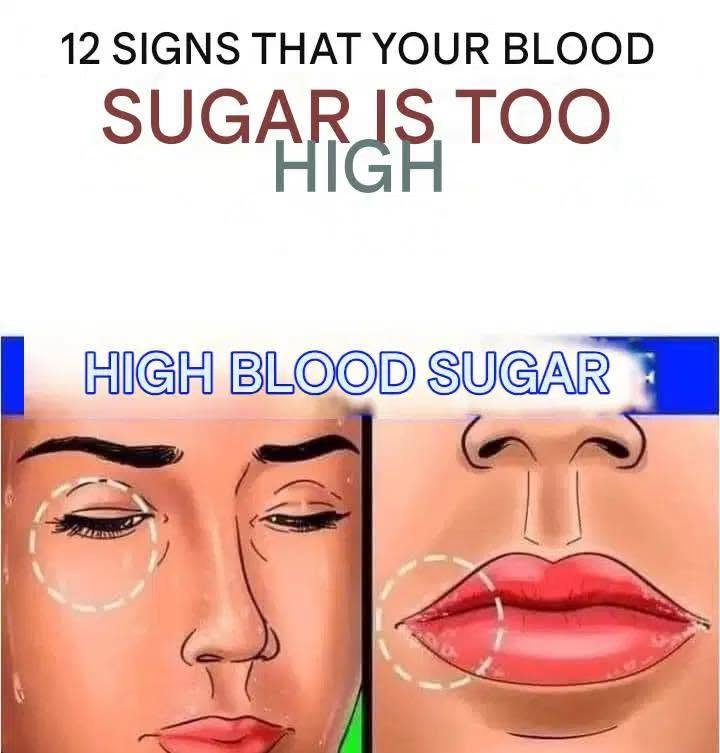
The High-Sugar Alert: 12 Signs Your Body May Be Telling You Something
This headline needs an important correction: there is no reliable list of 12 symptoms that proves you are eating too much sugar. High intake of added sugar is associated with weight gain, tooth decay, and increased risk of type 2 diabetes and cardiovascular problems, but symptoms such as thirst or frequent urination are more specifically signs of high blood glucose, not simply “eating too much sugar.” (CDC Stacks)
12 things worth paying attention to
- Frequent thirst
- Urinating more often, especially at night
- Unusual or persistent tiredness
- Blurred vision
- Unexplained weight loss
- Dry mouth or very dry skin
- Slow-healing cuts or sores
- Frequent hunger
- Recurring infections
- Increased dental cavities
- Unwanted weight gain
- Frequent cravings for sweet foods
Several of the first symptoms can occur when blood glucose is elevated. Importantly, prediabetes and even type 2 diabetes can have few or no noticeable symptoms, so symptoms alone aren’t a good screening test. (CDC Stacks)
🍬 What should you actually do?
Pay particular attention to added sugars in soft drinks, sweetened tea/coffee, sweets, desserts, and processed foods. Naturally occurring sugars in whole fruit and plain milk are different from added sugars. (CDC Stacks)
If you have persistent thirst, frequent urination, blurred vision, unexplained weight loss, or significant fatigue, ask a healthcare professional about checking your blood glucose rather than assuming sugar consumption is the cause.
Bottom line: Your body doesn’t have a specific “too much sugar” warning system. The best way to know whether your blood sugar is too high is with appropriate glucose testing.