🍉 No More Bland Watermelons: How to Pick a Sweeter One
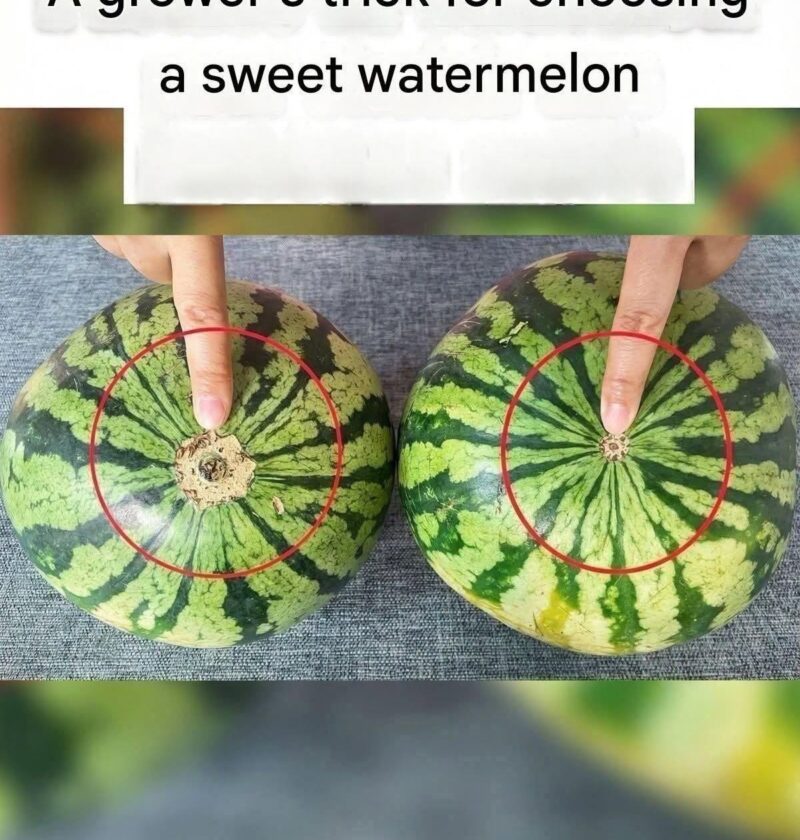
The idea is mostly sound, but there is no visual trick that can guarantee a perfectly sweet watermelon every time. Ripeness and sweetness vary by variety and growing conditions, so using several clues together is better than relying on one. (CAES Secure)
1. Look for a large yellow “field spot” 🟡
This is probably the best visual clue. Turn the watermelon over and look for the area where it rested on the ground.
- Creamy yellow to yellow: good sign
- White or pale green: may indicate it was harvested too early
A larger, more developed yellow spot generally suggests the melon had more time to mature. (Union County Center)
2. Choose one that feels heavy 💪
Pick up a few melons of similar size. Choose the one that feels heavier for its size. Watermelon is about 92% water, so greater weight generally indicates a juicy fruit. (University of Missouri Extension)
3. Look for a dull, not shiny, rind
A dull green exterior is generally a better sign of maturity. Very shiny skin can indicate an underripe melon. (UGA Extension)
4. Don’t put too much faith in the “thump test”
Tapping can provide a clue, but it isn’t foolproof. Extension specialists note that appearance and the field spot are generally more useful than sound alone. (Illinois Extension)
5. If it’s still on the vine, check the tendril
For homegrown watermelons, the curly tendril closest to the fruit is useful: when it becomes brown and dry rather than green, the melon is generally mature. (Cucurbit Breeding)
🍉 The easiest supermarket rule
Yellow field spot + heavy for its size + dull rind = a good starting point.
And remember: no external test can guarantee sweetness. Sugar content is ultimately determined by the fruit itself; commercial growers can measure it with a refractometer, but shoppers obviously don’t have one in the produce aisle. (Cucurbit Breeding)