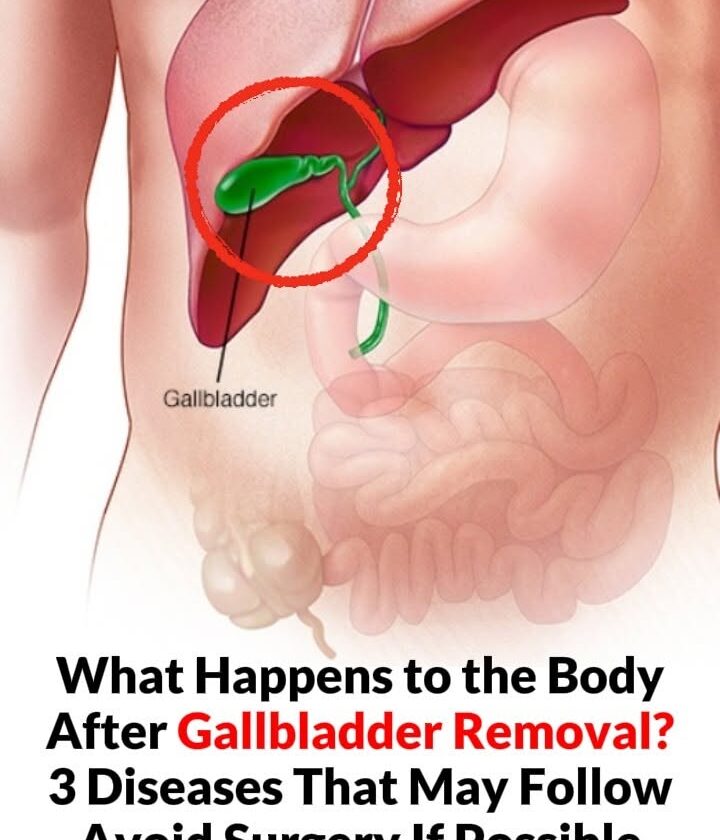
What Happens to the Body After Gallbladder Removal? 🩺
The headline “3 diseases that may follow—avoid surgery if possible” is misleading. Gallbladder removal, or cholecystectomy, is a common procedure, and most people can live normally without a gallbladder. Your liver continues making bile; instead of being stored in the gallbladder, bile flows directly into the small intestine. (NIDDK)
What can happen after surgery?
Some people experience temporary digestive changes, including:
- Diarrhea or softer stools — bile enters the intestine more continuously, and a small number of people develop more frequent stools. (NIDDK)
- Indigestion or abdominal discomfort — nausea, indigestion, and abdominal pain can occur after surgery and usually improve. (nhs.uk)
- Bile-duct or surgical complications — uncommon but potentially serious complications include bile leakage, infection, bleeding, or injury to a bile duct. (nhs.uk)
These aren’t necessarily “three diseases caused by losing your gallbladder.” Persistent symptoms after surgery are sometimes referred to as post-cholecystectomy syndrome, but they can have different causes and may require investigation. (nhs.uk)
❗ Should you avoid gallbladder surgery?
Not if your doctor recommends it for symptomatic or complicated gallstones.
People with silent gallstones—stones that aren’t causing symptoms—often don’t need treatment. But recurrent painful attacks, gallbladder inflammation, bile-duct obstruction, or gallstone-related pancreatitis can require treatment, and surgery is commonly the definitive treatment. (NIDDK)
In fact, leaving problematic gallstones untreated can lead to cholecystitis, bile-duct infection/obstruction, jaundice, or pancreatitis. (NIDDK)
🍽️ Life after gallbladder removal
Most people can eventually eat a normal, healthy diet. Some find that smaller meals and temporarily reducing very fatty foods makes the transition easier. (nhs.uk)
Bottom line: Gallbladder removal isn’t something to undergo unnecessarily, but it also isn’t something to avoid out of fear of developing “three diseases.” The right decision depends on why the gallbladder is being removed, your symptoms, complications, and your overall health.
If you’re considering surgery, ask your surgeon: “What happens if I don’t have the operation, and what are my alternatives?” That gives you the information needed for an informed decision.