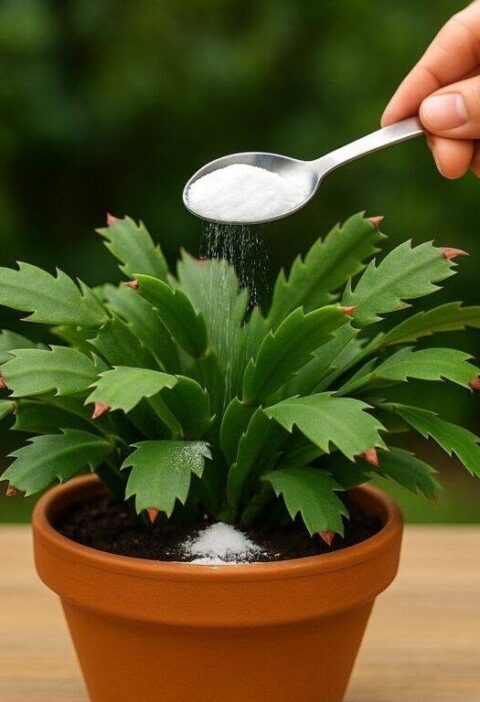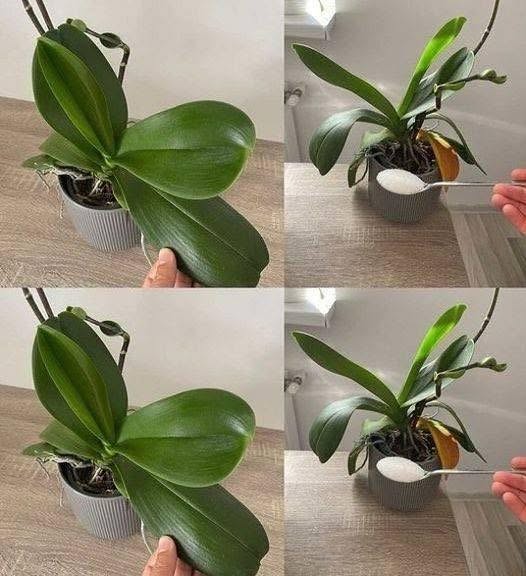
Orchids: “Just 1 Tablespoon and They’ll Bloom Non-Stop” — What Actually Works
The idea that one tablespoon of a kitchen ingredient will make an orchid bloom continuously is mostly a gardening myth. Orchids need the right combination of light, watering, temperature, roots, and nutrients—not a miracle fertilizer.
🌱 What orchids actually need
1. Bright, indirect light ☀️
Phalaenopsis orchids generally do best in bright light without intense midday sun. Insufficient light is a common reason an otherwise healthy orchid doesn’t flower.
2. Don’t overwater 💧
Water thoroughly when the growing medium has begun to dry, then allow excess water to drain completely. Orchids sitting in constantly wet conditions are vulnerable to root problems.
3. Use an orchid fertilizer
A balanced, water-soluble fertilizer formulated for orchids is a safer choice than homemade mixtures. Follow the product’s dilution instructions rather than adding an arbitrary tablespoon.
4. Give the plant a suitable temperature cycle 🌡️
For many Phalaenopsis orchids, a modest difference between daytime and nighttime temperatures can help encourage flowering.
5. Check the roots and potting medium
Healthy roots are generally firm and green when wet or silvery/gray when dry. Mushy, dark or rotten roots can indicate excessive moisture.
🚫 Be careful with viral “fertilizers”
You may see recommendations for baking soda, sugar, coffee grounds, rice water, milk, eggshells or banana peels. These aren’t guaranteed bloom boosters, and some can contribute to nutrient imbalances, mold or other problems.
If you want to fertilize, a properly formulated orchid fertilizer used according to its label is much more predictable.
🌺 What does “non-stop blooming” really mean?
No fertilizer can make an orchid flower continuously. Orchids naturally have periods of flowering and rest. With good care, a healthy Phalaenopsis can produce impressive flower displays and may rebloom, but flowering depends on the plant’s biology and growing conditions.