🧽 Very Dirty Mop? Don’t Throw It Away Yet!
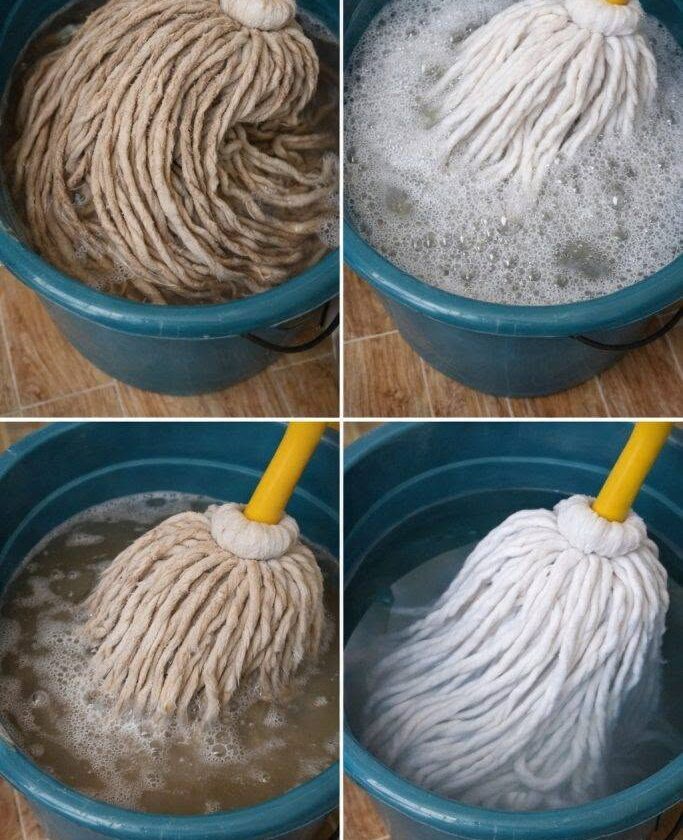
The viral claim that “one drop of this ingredient” will make a filthy mop “as good as new” is usually exaggerated. A much more reliable approach is thorough rinsing + detergent + proper drying.
✨ Simple deep-clean method
- Remove the mop head if possible and shake/rinse out loose dirt.
- Soak it in warm water with a small amount of laundry detergent or dish soap for about 15–30 minutes.
- Agitate the fibers well, then rinse until the water runs clear. (Vileda)
- If the manufacturer’s instructions permit machine washing, wash the removable mop head according to its care label. Avoid fabric softener on microfiber, as it can reduce its cleaning performance. (Vileda)
- Hang it up and let it dry completely before storing. A damp mop is much more likely to develop unpleasant odors and microbial growth. (Vileda)
🧴 What if it needs disinfecting?
If the mop head is compatible with bleach, a properly diluted bleach solution can be used according to the bleach and mop manufacturer’s instructions. Never mix bleach with vinegar, ammonia, acids, or other cleaning products.
For microfiber mop heads, check the care instructions carefully—some manufacturers specifically advise against bleach. (Vileda)
🚮 When should you replace it?
If the mop remains smelly after washing, has badly damaged/fraying fibers, or no longer cleans effectively, replacing the head is better than repeatedly trying to rescue it. (Hoover)
Bottom line: There isn’t a magic drop that restores every dirty mop. Detergent, thorough rinsing, and complete drying are the dependable basics.