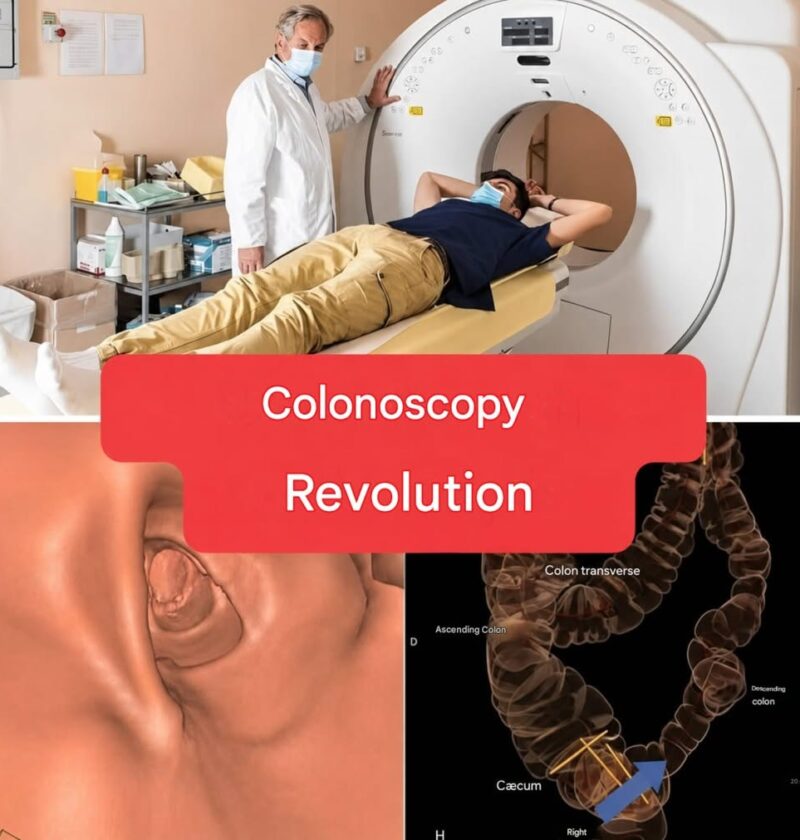
If you’re referring to the headline “New method: colonoscopy will no longer be an invasive examination,” the claim is misleading. The article itself acknowledges that colonoscopy has not been replaced.
K
Kitchen Crave
+1
What is actually new?
There are several less-invasive ways to examine or screen the colon:
CT colonography (“virtual colonoscopy”) uses CT scans rather than a conventional scope. It still generally requires bowel preparation and inflation of the colon, and if a suspicious polyp is found, a conventional colonoscopy is usually needed to remove or biopsy it.
E
ESGE
Colon capsule endoscopy involves swallowing a camera capsule that takes pictures as it passes through the digestive tract. It avoids inserting a colonoscope, but it isn’t yet a universal replacement for colonoscopy; evidence and availability remain limitations.
N
NICE
Stool tests, such as FIT, can screen for colorectal cancer without any procedure. An abnormal result, however, generally requires follow-up colonoscopy.
New blood-based tests are also being developed and studied, but they currently don’t make colonoscopy obsolete.
K
Kitchen Crave
Why colonoscopy is still important
A major advantage of conventional colonoscopy is that the doctor can see a suspicious area, take a biopsy, and remove many precancerous polyps during the same procedure. Imaging and stool-based tests generally can’t do that.
P
PubMed
Bottom line: The future of colorectal screening is becoming less invasive, but colonoscopy hasn’t “stopped being invasive.” Depending on your age, risk factors, symptoms, and previous screening results, an alternative may sometimes be appropriate—but it should be chosen with a clinician rather than based on a viral headline.
K
E
N
Sources