🧺 Vinegar Can Help Freshen Towels—But “Whiter Whites” Is More Complicated
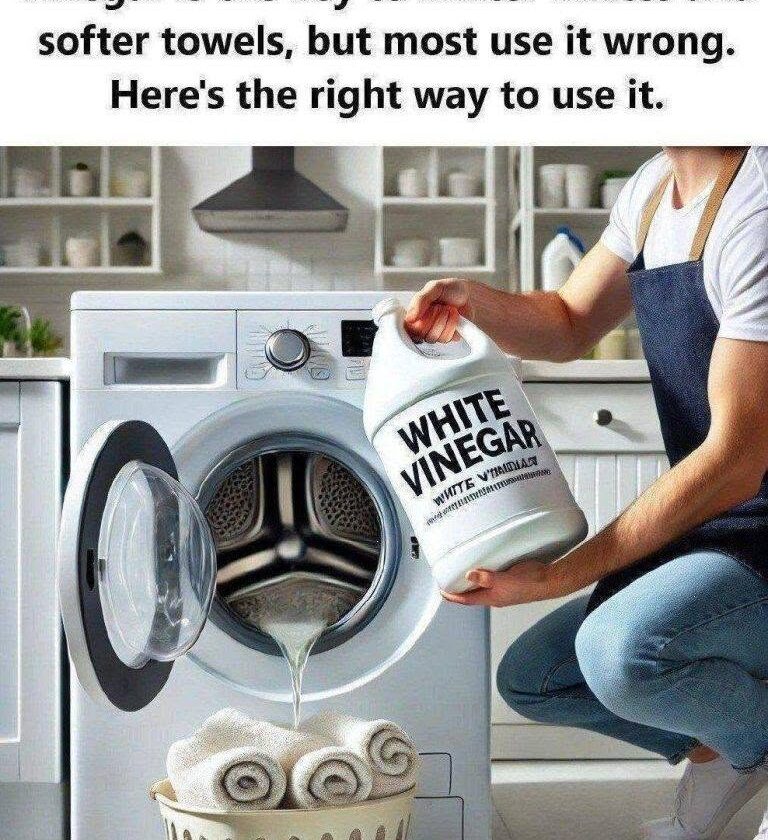
White vinegar can be useful in laundry, particularly when towels have detergent or hard-water buildup that makes them stiff and less absorbent. But it isn’t a universal whitening or fabric-softening solution, and frequent use in some washing machines may damage rubber components. (Clorox™)
🧴 The safer way to use it
For a stiff or musty towel, consider an occasional pre-soak:
- Fill a basin with warm water.
- Add about 1 cup (240 mL) of white vinegar per gallon (3.8 L) of water.
- Soak the towels, then rinse thoroughly.
- Wash normally according to the care label. (Cleaning Institute)
- Dry thoroughly, avoiding excessive heat.
This can help dissolve mineral/detergent deposits that contribute to stiffness and reduced absorbency. (Clorox™)
🤍 Will vinegar actually whiten white clothes?
It may help brighten some fabrics, particularly when buildup is making them look dull, but vinegar isn’t a substitute for a proper laundry whitener. For heavily yellowed or stained whites, an appropriate oxygen-based or other fabric-safe whitening product may work better. (Whirlpool)
⚠️ Three important rules
- Never mix vinegar with chlorine bleach. The combination can produce toxic chlorine gas. (Whirlpool)
- Don’t mix vinegar and baking soda expecting a super-cleaner. They largely neutralize each other.
- Check your washing-machine manufacturer’s instructions. Whirlpool and Maytag specifically caution against routinely putting vinegar directly into the machine because its acidity can damage components over time. (Whirlpool)
Bottom line: Vinegar can be a useful occasional treatment for stiff, residue-covered towels, but it’s not a miracle whitening agent. For everyday laundry, use the correct amount of detergent, avoid overloading the washer, and follow the garment and appliance care instructions.