🧽 The “Effortless” Oven-Cleaning Trick—What Actually Works
If your oven has burnt-on grease and food, you don’t necessarily need an aggressive DIY mixture. The safest method depends on the oven’s finish and whether it has a self-cleaning function.
✨ For ordinary grime
- Make sure the oven is completely cool.
- Remove the racks.
- Use warm water and a small amount of mild dish detergent with a soft cloth or non-abrasive sponge.
- For stubborn residue, let the dampened area sit for a while to soften the buildup, then gently wipe or scrub.
- Rinse away detergent residue with a clean damp cloth and dry. Manufacturers such as Bosch and Whirlpool recommend mild soap and water for routine cleaning. (Bosch Home)
🔥 For seriously burned-on deposits
If your oven has a self-cleaning cycle, check the owner’s manual and use that feature according to the manufacturer’s instructions. High-temperature self-cleaning cycles turn baked-on food and grease into ash that can then be wiped away. (Home Delivery)
⚠️ Avoid viral cleaning hacks
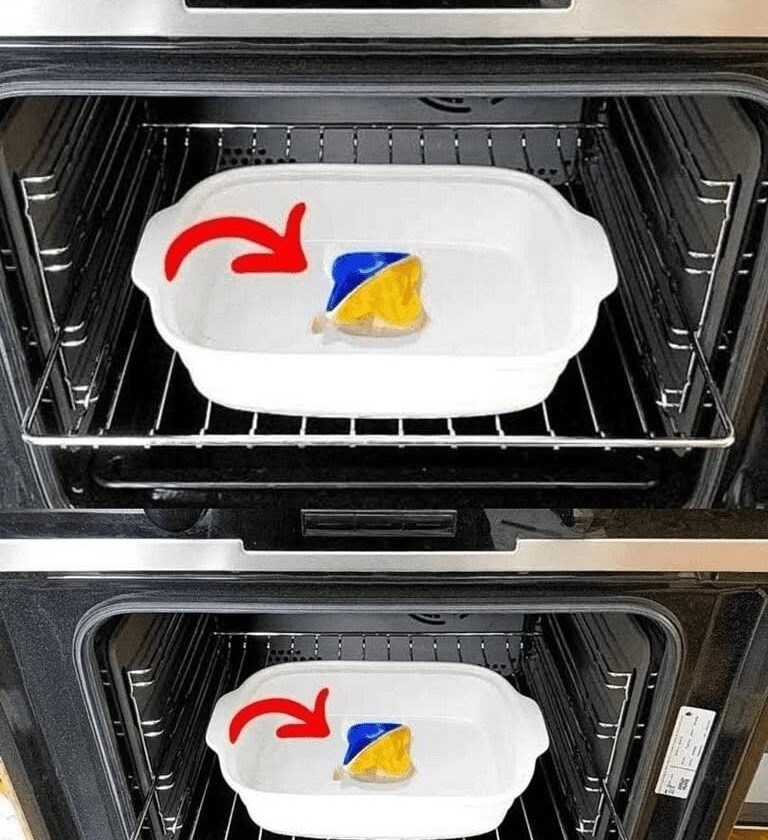
Don’t assume that dishwasher tablets, bleach, strong acids, or abrasive powders are safe for every oven. Some manufacturers specifically prohibit harsh or abrasive cleaners because they can damage the enamel, glass, seals, or other surfaces. (Bosch Home)
Never scrub the door gasket aggressively, and don’t use sharp metal tools on oven glass—they can damage or scratch it. (Fisher & Paykel)
Bottom line: There isn’t one magic “effortless” ingredient that safely cleans every oven. Warm water + mild detergent for routine grime, and the manufacturer’s recommended self-cleaning method for heavy buildup, is the safer approach.