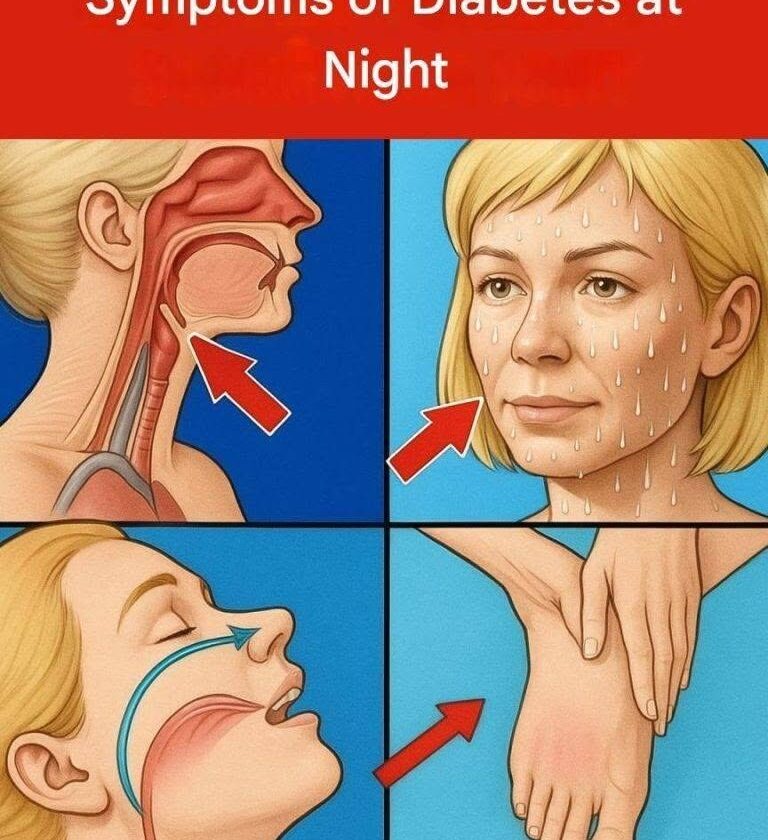
5 Diabetes Symptoms That May Be More Noticeable at Night
There isn’t a medically recognized list of five symptoms that only occur at night. Diabetes symptoms can occur at any time, and many people with type 2 diabetes have few or no symptoms. (CDC)
However, these nighttime patterns can sometimes be clues:
1. 🚽 Waking repeatedly to urinate
High blood glucose can cause the kidneys to remove more glucose through urine, increasing urination. If you’re regularly getting up several times each night, it’s worth discussing with a healthcare professional. (NIDDK)
2. 💧 Excessive thirst
Frequent nighttime thirst—especially when accompanied by increased urination—can occur with elevated blood glucose. (NIDDK)
3. 😓 Sweating during sleep
In someone taking insulin or certain diabetes medications, sweating during the night can be a sign of low blood glucose (hypoglycemia). (NIDDK)
4. 😴 Nightmares or restless sleep
Nightmares, crying out during sleep, or waking feeling unusually tired, irritable or confused can occur with nighttime hypoglycemia. (NIDDK)
5. 👁️ Blurry vision or unusual fatigue
Blurred vision and fatigue are recognized diabetes symptoms. They aren’t specifically nighttime symptoms, but you may notice them when waking or during the night. (CDC)
🩸 Don’t diagnose diabetes from symptoms alone
The most reliable way to determine whether you have diabetes is blood-glucose testing, such as an A1C or fasting glucose test. (NIDDK)
If you already have diabetes and repeatedly wake sweating, shaking, confused or with nightmares, check your glucose if possible and tell your healthcare team. Nighttime hypoglycemia can become dangerous. (NIDDK)
Bottom line: Frequent nighttime urination and thirst can accompany high blood sugar, while sweating, nightmares and confusion during sleep can indicate low blood sugar, particularly in people taking glucose-lowering medication. Neither pattern by itself proves diabetes.