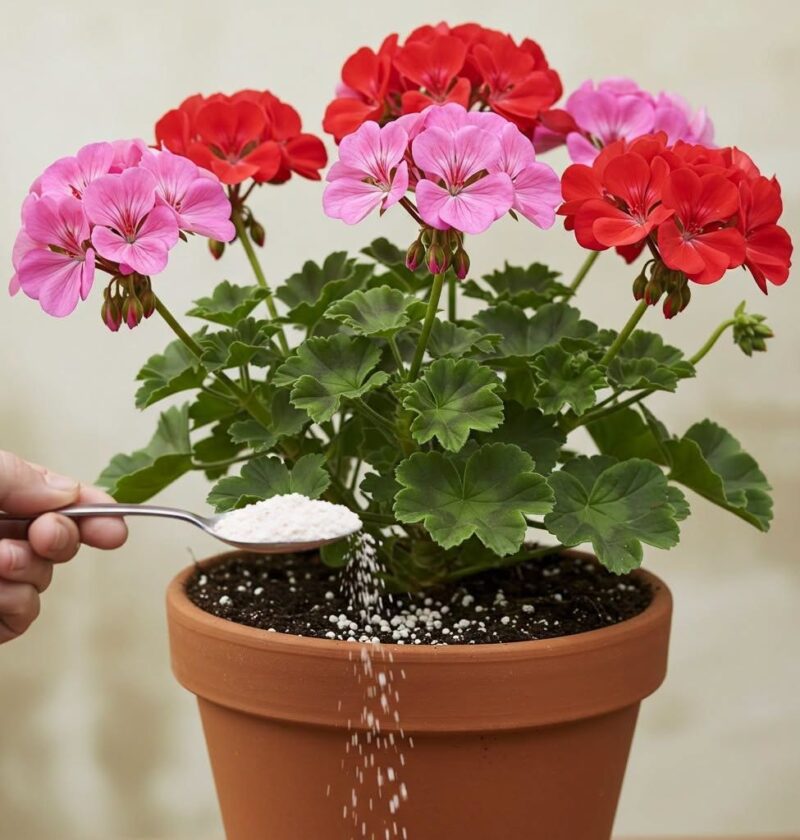
🌸 Geranium Revival Mix — What Actually Works
If your geranium looks weak, leggy, or isn’t flowering, you don’t need a mysterious “miracle” kitchen ingredient. Proper fertilizer, light, watering and pruning are much more reliable.
🪴 A simple revival routine
1. Start with a balanced fertilizer
For container geraniums, use a water-soluble, balanced fertilizer diluted according to the label. Extension guidance commonly recommends feeding during active growth every few weeks rather than heavily fertilizing. Overfertilizing can actually reduce flowering and damage roots. (University of Minnesota Extension)
2. Give it plenty of light ☀️
Geraniums generally flower best with at least about 6 hours of direct sunlight. Insufficient light can produce lots of leaves but fewer flowers. (Yard and Garden)
3. Let the soil dry slightly between waterings
Water thoroughly when the top 1–2 inches of soil becomes dry, and make sure excess water can drain away. Geraniums tolerate somewhat dry soil better than constantly wet roots. (University of Minnesota Extension)
4. Remove faded flowers ✂️
Regular deadheading encourages continued flowering and prevents the plant from putting energy into seed production. (Yard and Garden)
5. Prune leggy growth
If the plant has become long and sparse, cutting back overly long stems can encourage new, bushier growth. UGA Extension recommends pruning neglected geraniums above a node and then resuming appropriate fertilization. (UGA Extension)
🚫 What about banana peels, coffee, sugar or eggshells?
These viral “fertilizer recipes” aren’t necessary. They don’t provide a reliably balanced nutrient supply, and adding random materials to the pot can create problems. A properly formulated fertilizer is easier to dose and more predictable.
Bottom line: For a geranium revival, think sun + good drainage + moderate feeding + deadheading + pruning, not a secret one-teaspoon potion. 🌺