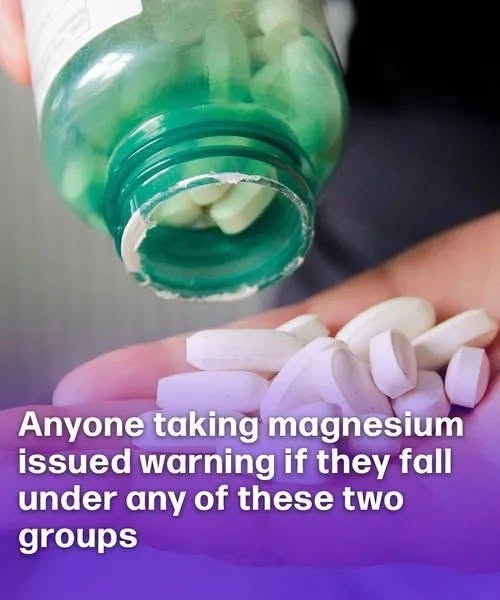
The warning is partly legitimate, but “never take magnesium” is too strong.
The two groups that deserve the most caution are:
People with reduced kidney function, especially advanced chronic kidney disease or those on dialysis. The kidneys normally remove excess magnesium. When kidney function is poor, magnesium from supplements or magnesium-containing medicines can accumulate and potentially become toxic.
O
Office of Dietary Supplements
+1
People taking medications that interact with magnesium. Magnesium can reduce absorption of some medicines, particularly tetracycline/quinolone antibiotics and bisphosphonates used for osteoporosis. These often need to be taken several hours apart rather than completely avoided.
O
Office of Dietary Supplements
⚠️ What about older adults?
Older age itself isn’t a reason to avoid magnesium. However, kidney function tends to decline with age, sometimes without obvious symptoms, so older adults may be more susceptible to magnesium accumulation—particularly if they have kidney disease or take multiple medications.
N
National Kidney Foundation
Also, magnesium from normal foods is generally not the concern. The greater issue is concentrated supplements and magnesium-containing medications such as some laxatives and antacids.
Bottom line: If you have kidney disease, are on dialysis, or take several medications, check with a doctor or pharmacist before starting a magnesium supplement. Don’t stop prescribed medicines based on a viral warning.
N
National Kidney Foundation
O
N
Sources