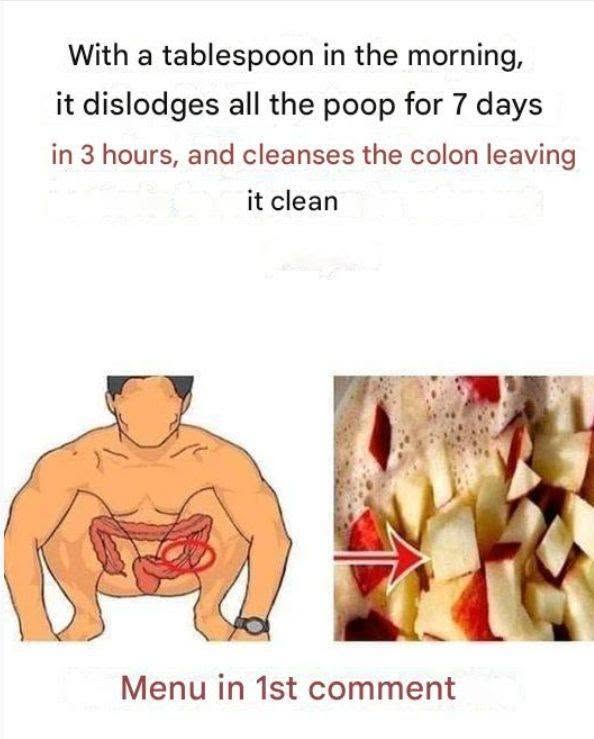
If you’re referring to the claim “3 natural remedies that facilitate the evacuation of stools,” there are several simple approaches supported by medical guidance. They can help with ordinary constipation, but they’re not a cure for every cause of constipation.
3 gentle approaches to try
Increase fiber gradually
Add foods such as oats, whole grains, beans, lentils, pears, apples, berries, and vegetables. Adults generally need around 22–34 grams of fiber daily, depending on age and sex. Increase it gradually to reduce bloating.
N
NIDDK
Drink enough fluids
Water and other suitable fluids help fiber work and can make stools softer and easier to pass. Your individual fluid needs depend on your health, activity level, and other factors.
N
NIDDK
Move and establish a toilet routine
Regular walking or other physical activity can help bowel movements. It can also help to try using the toilet 15–45 minutes after breakfast, when eating naturally stimulates colon movement. Don’t ignore the urge to go, and placing your feet on a small stool can make the position more comfortable.
N
NIDDK
+1
A food-based option
Some fruits containing sorbitol, such as apples, apricots, grapes/raisins, raspberries, and strawberries, may help soften stools.
N
nhs.uk
⚠️ When not to treat it yourself
Seek medical advice promptly if constipation comes with blood in the stool, persistent abdominal pain, vomiting, fever, inability to pass gas, unexplained weight loss, or significant lower-back pain.
N
NIDDK
Also, if constipation is new, persistent, or repeatedly returning, it’s worth discussing with a clinician because medications and conditions such as hypothyroidism, diabetes, or bowel disorders can cause it.
N
NIDDK
Bottom line: The safest “natural remedy” combination is gradually more fiber + adequate fluids + regular movement/toilet habits. It usually works better than dramatic detox drinks or herbal laxatives.
N
N
Sources