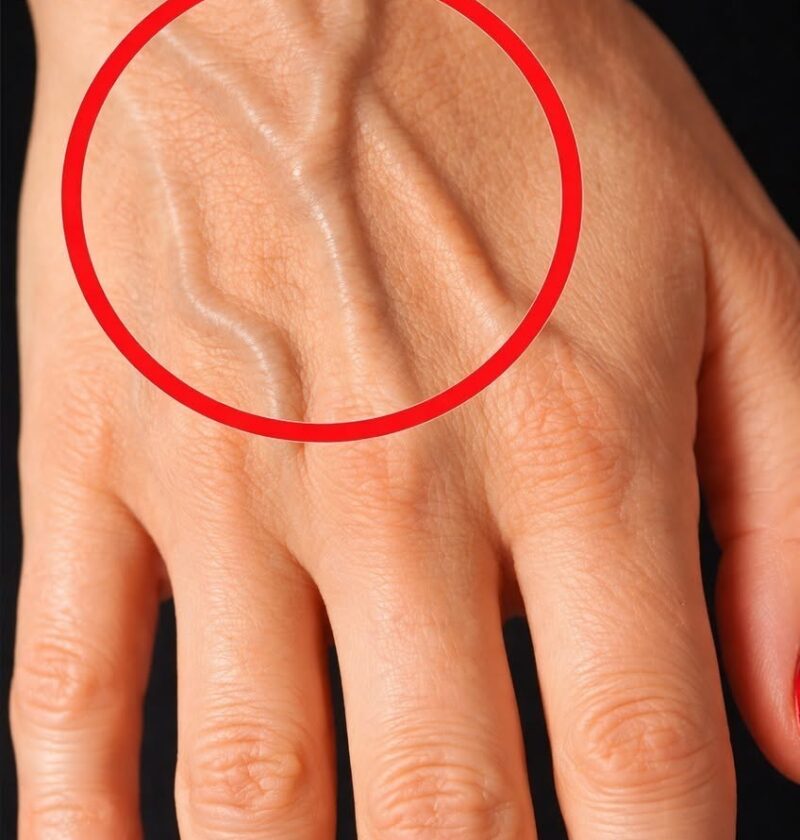
If you’re referring to the viral claim “If your veins are visible, it means you are…”, visible veins do not automatically mean you’re unhealthy or have a circulation problem.
Common reasons veins become more noticeable include:
Low body fat — there is less tissue covering superficial veins.
Exercise — increased blood flow and muscle expansion can temporarily make veins stand out.
Heat — blood vessels dilate in warm conditions.
Genetics — some people naturally have more prominent superficial veins.
Age — skin becomes thinner and loses some elasticity, making veins easier to see.
Dehydration can sometimes make veins appear more prominent, although it isn’t the only explanation.
When visible veins may be a warning sign
Pay attention if a vein becomes suddenly prominent, especially if you also have pain, swelling, redness, warmth, or tenderness. A painful, swollen leg can be a sign of a deep-vein thrombosis (DVT) and should be medically evaluated.
Prominent, twisted or bulging veins in the legs can also be varicose veins, which are common and aren’t necessarily dangerous but can sometimes cause aching, swelling or skin changes.
If prominent veins are accompanied by sudden shortness of breath, chest pain, coughing up blood, fainting, or severe dizziness, seek emergency medical care because a blood clot may have traveled to the lungs.
Bottom line: visible veins by themselves usually don’t tell you that you’re dehydrated, lacking a vitamin, or “have thick blood.” The location, suddenness, and accompanying symptoms matter much more.