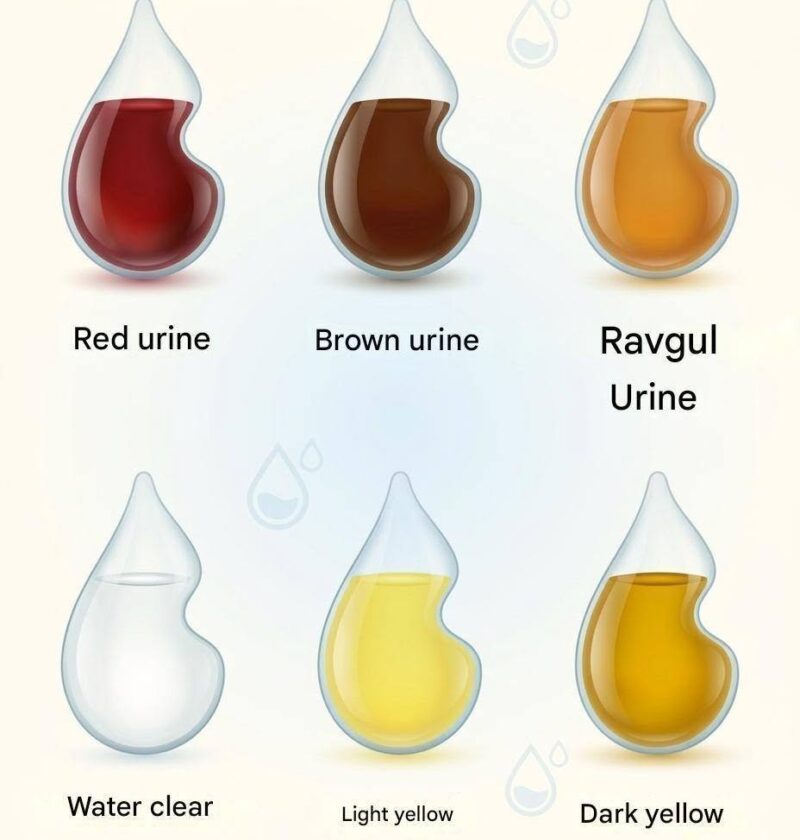
Urine color can give you useful clues about hydration, but it isn’t a complete health test.
🟨 Pale yellow/straw: generally a good sign that you’re hydrated.
N
nhs.uk
+1
🟡 Dark yellow/amber: often means your urine is concentrated and you may need more fluids, especially if you’re thirsty or urinating less frequently.
N
nhs.uk
🟠 Orange: can occur with significant dehydration, but medicines and other conditions can also change urine color. Persistent orange urine deserves medical advice.
G
Guy’s and St Thomas’ NHS Trust
+1
🩷 Pink/red: may indicate blood and shouldn’t simply be assumed to be dehydration. Foods and some medicines can also cause reddish urine.
N
nhs.uk
🟤 Brown/very dark: can indicate severe dehydration, but may also have other causes; seek medical advice if it persists.
N
North Tees NHS Trust
☁️ Cloudy: can sometimes occur with a urinary tract infection, particularly when accompanied by burning, frequent urination, pain, fever, or blood.
N
nhs.uk
🟢 Green/blue: uncommon and can be related to certain medicines, dyes, or medical conditions; persistent unusual coloring should be checked.
One important caveat: vitamins (especially some B vitamins), medications, foods, and supplements can change urine color without indicating illness.
N
North Tees NHS Trust
+1
Bottom line: for most people, pale yellow urine is a reasonable target. Don’t force excessive amounts of water just to make your urine completely clear.
N
nhs.uk
If your urine is red, dark brown, or persistently unusual, particularly with pain, fever, weakness, or reduced urination, it’s worth getting medical evaluation.
N
nhs.uk
N
G
N
Sources