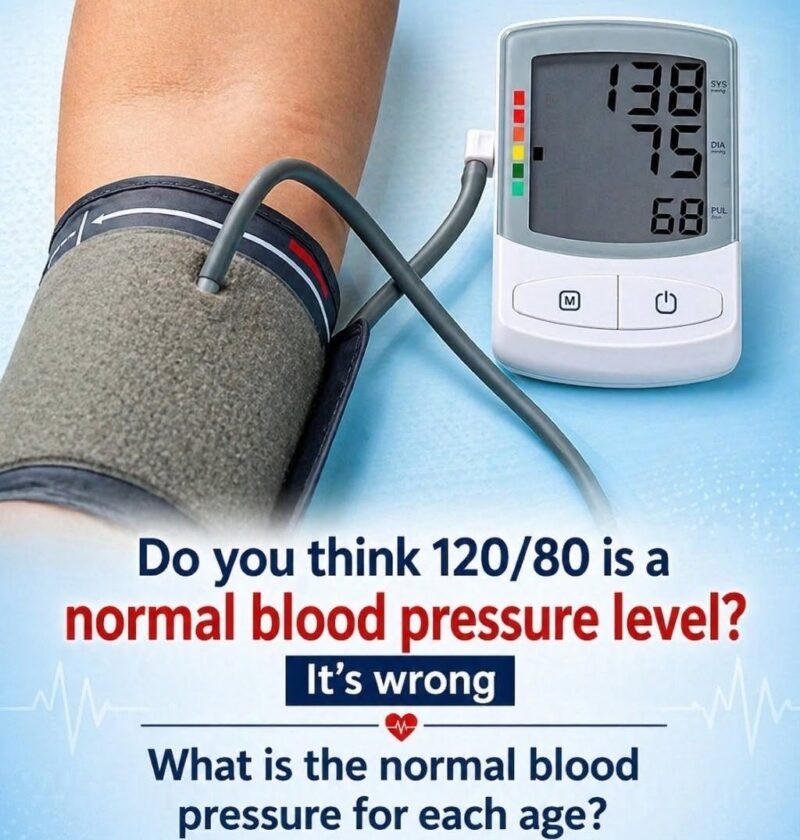
What Is Normal Blood Pressure at Different Ages?
A common misconception is that there is a separate “normal” blood-pressure number for every adult age. For adults, the same general categories are used regardless of whether you’re 40, 60, 80, or 90. The American Heart Association’s current adult guideline defines normal blood pressure as below 120/80 mmHg.
P
professional.heart.org
+1
Age General adult target/category
18–39 <120/80 is normal
40–59 <120/80 is normal
60–69 <120/80 is normal
70–79 <120/80 is normal
80+ <120/80 is still classified as normal, but treatment goals should be individualized
How to interpret the numbers
Below 120/80: Normal
120–129 and below 80: Elevated
130–139 or 80–89: Stage 1 hypertension
140 or higher or 90 or higher: Stage 2 hypertension
Above 180 and/or 120: Severe hypertension; if accompanied by symptoms such as chest pain, shortness of breath, weakness, vision changes, or difficulty speaking, it is an emergency.
P
professional.heart.org
+1
Importantly, one high reading does not necessarily mean you have hypertension. Blood pressure should generally be assessed using properly taken repeated readings rather than a single measurement.
P
professional.heart.org
What about children?
Children are different. Their normal blood pressure depends on age, sex, and height, so there isn’t one adult-style number that applies to every child. Pediatric blood pressure is interpreted using age/sex/height percentiles.
N
NHLBI, NIH
+1
If you’re in your 80s
Being older doesn’t mean that 140/90 automatically becomes “normal.” At the same time, doctors may individualize blood-pressure treatment in older adults depending on frailty, falls, dizziness, other illnesses, and medications.
If you tell me your age and your actual blood-pressure reading (for example, 145/78), I can explain exactly what that reading means and whether it is concerning.
P
N
Sources