“If hair grows in your ears, it’s because your body…”
This viral headline often implies that ear hair is a warning sign of a hidden disease or that it means your body is lacking something. That’s generally not true.
👂 Why does ear hair grow?
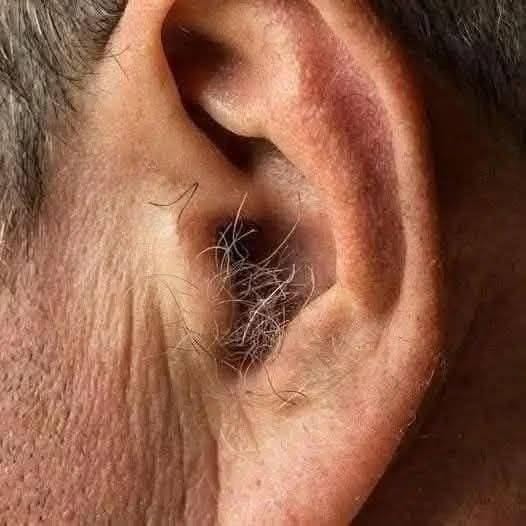
Ear hair is normal body hair. Hair follicles in and around the ear respond to hormones, particularly androgens. As people age, these hairs can become thicker, longer, and more noticeable, especially in men.
Genetics also plays a major role. Some people naturally have much more ear hair than others.
Does it mean something is wrong?
Usually, no. Ear hair by itself isn’t a reliable sign of:
Diabetes
High cholesterol
Heart disease
A vitamin deficiency
“Toxin buildup”
Poor circulation
You may see social-media claims connecting hairy ears with heart disease, but the presence of ear hair isn’t sufficient to diagnose cardiovascular disease. If you’re concerned about heart health, blood pressure, cholesterol, diabetes risk, smoking, and family history are much more meaningful factors.
✂️ Can you remove it?
If the hair is bothersome, you can carefully trim visible outer-ear hair with an appropriate electric trimmer or have it professionally removed.
Avoid putting sharp objects deep into the ear canal. Ear-canal hair serves a protective function, and injuries there can cause infection or damage.
Bottom line: Ear hair is usually just a normal combination of aging, hormones, and genetics—not a message that your body is sick.