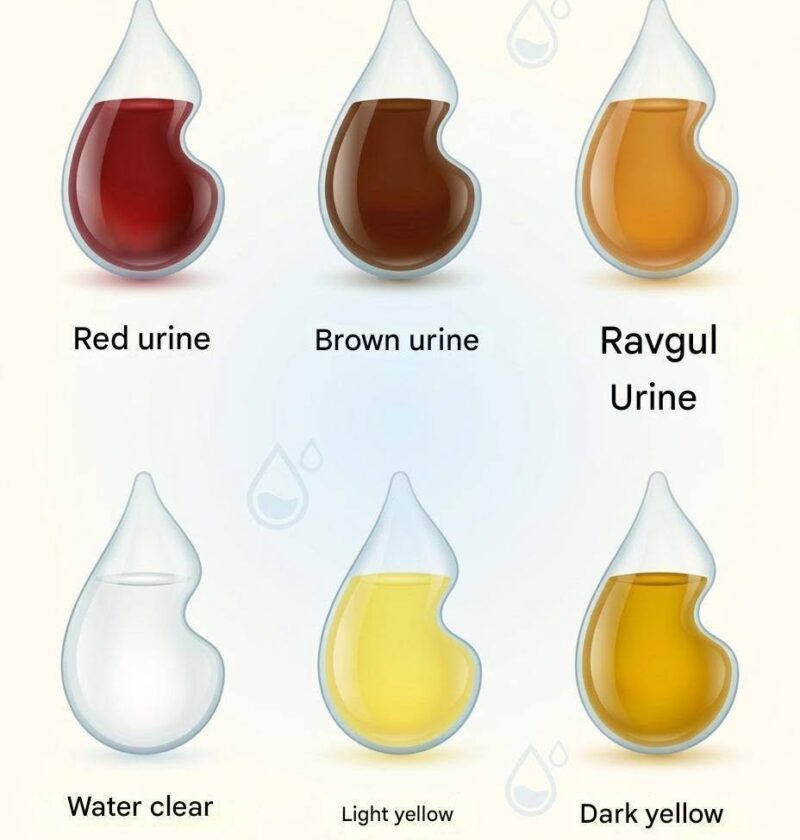
Urine color can give you useful clues, but it isn’t a diagnosis. Hydration, foods, vitamins, medications, and medical conditions can all change urine color.
M
MedlinePlus
What the colors can mean
🟨 Pale yellow: Generally normal and commonly associated with adequate hydration.
🟨 Dark yellow/amber: Often means your urine is concentrated, which can happen with dehydration.
M
MedlinePlus
💧 Very clear: Often means you’ve been drinking plenty of fluid. Consistently excessive thirst and urination, however, should be discussed with a clinician.
🟢 Bright/neon yellow: Frequently caused by vitamins—particularly riboflavin (B2)—rather than a disease.
M
MedlinePlus
🩷 Pink/red: Beets and some medications can cause this, but it can also represent blood in the urine. Unexplained blood should be evaluated.
M
MedlinePlus
+1
🟤 Brown/cola-colored: Can occur with significant dehydration, but may also accompany certain medical conditions. Persistent brown urine warrants medical evaluation.
☁️ Cloudy: Can occur with a urinary infection, crystals, or other urinary-tract conditions—especially if there’s burning, urgency, fever, or pain.
M
MedlinePlus
🔵🟢 Blue or green: Unusual colors can result from certain medications, dyes, or medical conditions. Persistent unexplained changes should be checked.
🚨 Don’t ignore these changes
Seek medical advice for visible blood in your urine, especially if you haven’t eaten something like beets that could explain the color. Blood can be associated with infections, kidney or bladder stones, kidney disease, and other conditions.
M
MedlinePlus
Also seek prompt care if unusual urine color occurs with fever, severe abdominal/side/back pain, vomiting, inability to urinate, or a major reduction in urine output.
M
MedlinePlus
+1
Bottom line: Urine color is a helpful clue—particularly for hydration—but urinalysis is far more informative when there is concern about kidney, bladder, or urinary-tract health.
M
MedlinePlus
M
Sources