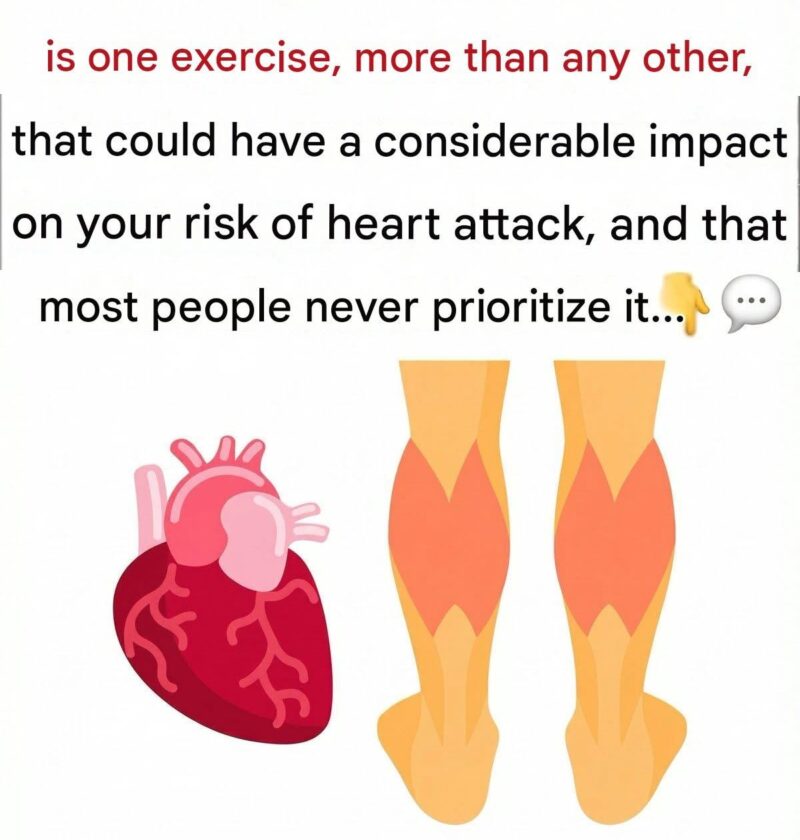
If you’re referring to the headline “A cardiologist reveals the number-one exercise to prevent a heart attack,” the most defensible answer is brisk walking—but there isn’t one exercise proven to prevent heart attacks by itself.
❤️ Why brisk walking?
The American Heart Association recommends at least 150 minutes of moderate-intensity aerobic activity per week, and brisk walking is one of the simplest ways to reach that goal. Regular aerobic activity lowers cardiovascular risk and helps improve blood pressure, cholesterol, blood sugar, fitness, and weight.
W
www.heart.org
+1
A practical routine is:
30 minutes of brisk walking, 5 days a week, or
10-minute brisk walks after meals, three times a day.
Aim for a pace where you’re breathing harder but can still carry on a conversation.
W
www.heart.org
Don’t stop at walking
For the greatest overall benefit, add strength training at least twice a week and reduce prolonged sitting. Current AHA recommendations include both aerobic activity and muscle-strengthening exercise.
W
www.heart.org
+1
And exercise is only one part of heart-attack prevention: not smoking, controlling blood pressure and cholesterol, managing diabetes, maintaining a healthy weight, and eating a heart-healthy diet are also important.
W
www.heart.org
+1
Important: If you’ve been sedentary, have known heart disease, or develop chest pressure, unusual shortness of breath, dizziness, or fainting during exercise, don’t push through it—get medical advice. For people with unstable cardiovascular conditions, exercise may need to be modified or temporarily avoided.
A
ahajournals.org
Bottom line: There is no magic “number-one” exercise. For many people, regular brisk walking is an excellent place to start—and consistency matters far more than choosing a supposedly magical exercise.
W
A
Sources