What does the color of your urine say about your health?
Urine color can provide useful clues about hydration, but it isn’t a complete health test. Food, vitamins, medicines, and certain medical conditions can also change its appearance.
G
Guy’s and St Thomas’ NHS
+1
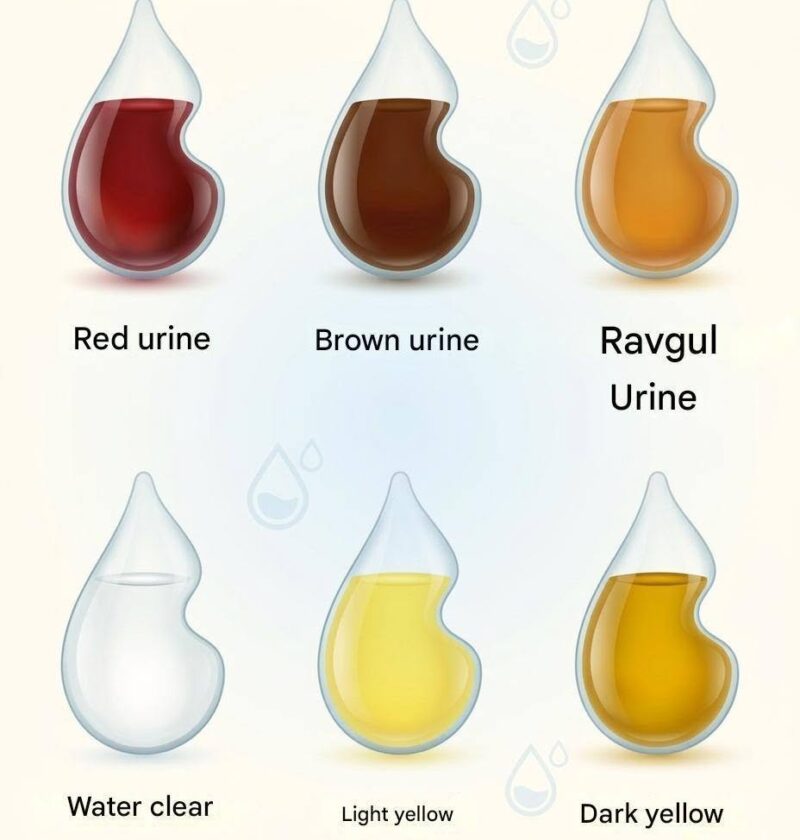
Pale yellow/straw-colored: Usually a sign of good hydration.
G
Guy’s and St Thomas’ NHS
Dark yellow/amber: Often means your urine is concentrated and you may need more fluids, particularly if you’re also thirsty or have a dry mouth.
R
Royal Devon NHS
Very clear: Usually means you’re drinking plenty of fluid. Constantly forcing large amounts of water isn’t necessary.
Bright/neon yellow: Often caused by B vitamins or supplements, rather than a disease.
L
Lancashire NHS Trust
Cloudy: Can sometimes occur with a urinary tract infection, especially if accompanied by burning, frequent urination, or an unpleasant smell.
N
nhs.uk
Pink or red: Can result from foods such as beetroot, but it can also indicate blood in the urine. Blood should be medically evaluated, even if there is only a small amount or it happens once.
N
nhs.uk
Dark brown: May reflect severe dehydration, but can have other causes, including blood or medication effects. Persistent brown urine deserves medical assessment.
N
nhs.uk
+1
Orange: Can occur with concentrated urine, but medicines and other conditions can also change urine to orange. Persistent unusual coloring should be checked.
G
Guy’s and St Thomas’ NHS
+1
🚨 When to pay attention
Don’t rely on color alone. Seek medical advice if unusual urine color persists without an obvious explanation, particularly if you have blood in the urine, pain when urinating, fever, side/back pain, markedly reduced urine output, or feel very unwell.
N
nhs.uk
+1
The simplest rule: pale yellow urine is generally a reassuring sign of hydration, while consistently dark urine can be a reason to increase fluids—unless you’ve been told to restrict fluids because of a medical condition.
G
R
L
Sources