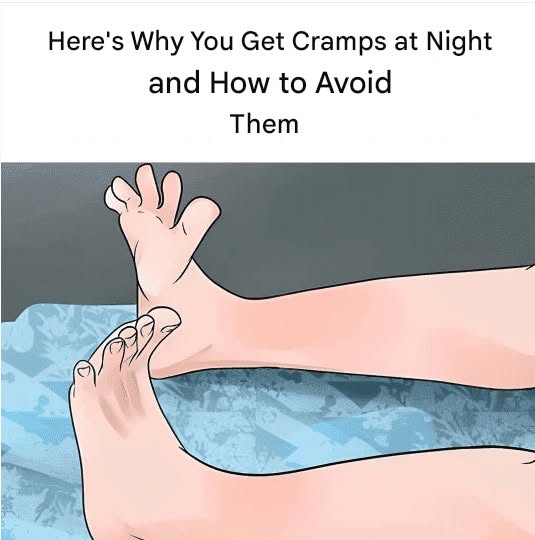
The exact cause is not always clear, but several factors can contribute:
1. Muscle fatigue or overuse
- Long periods of standing, walking, or intense exercise can strain muscles.
- Tired muscles may be more likely to cramp during rest.
2. Dehydration
- Not drinking enough fluids can affect normal muscle function.
- Sweating heavily or losing fluids may increase the risk.
3. Mineral and electrolyte changes
Low levels of certain minerals, such as:
- Magnesium
- Potassium
- Calcium
can contribute to muscle problems in some people, although cramps are not always caused by a deficiency.
4. Reduced movement during sleep
When you stay in one position for a long time, muscles and nerves may become more prone to sudden contractions.
5. Age-related changes
As we get older, changes in muscles, nerves, and circulation can make nighttime cramps more common.
6. Certain medications or health conditions
Some medications and conditions (including nerve problems, kidney disease, diabetes, or circulation issues) may be linked with muscle cramps.
What may help prevent nighttime cramps
✅ Stretch calf and leg muscles before bed
✅ Stay hydrated during the day
✅ Keep active with regular walking or exercise
✅ Avoid sitting in the same position for long periods
✅ Wear comfortable, supportive footwear during the day
What to do when a cramp happens
- Gently stretch the cramped muscle.
- For a calf cramp: straighten your leg and pull your toes toward your body.
- Massage the area.
- Apply warmth if it helps relax the muscle.
When to talk to a healthcare professional
Seek advice if cramps:
- Happen frequently or are severe
- Cause major sleep disruption
- Come with swelling, weakness, numbness, or skin changes
- Start after a new medication
Occasional nighttime cramps are usually harmless, but frequent cramps are worth discussing to look for possible causes and solutions.