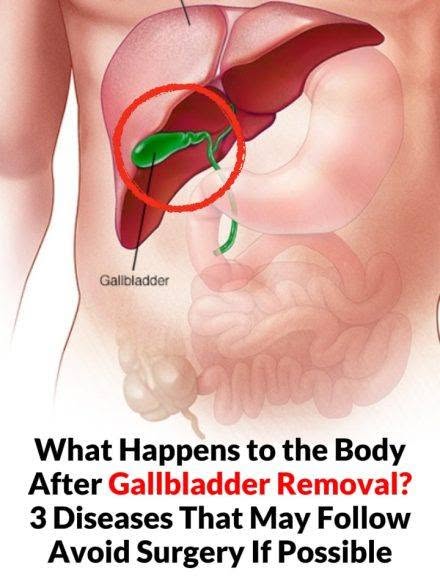
What Happens to the Body After Gallbladder Removal? Separating Facts From Myths
The headline “3 diseases that may follow gallbladder removal — avoid surgery if possible” can be misleading. Gallbladder removal (cholecystectomy) is a very common procedure and is considered safe and effective for many people, especially those with painful or complicated gallstones.
The gallbladder is a small organ that stores bile made by the liver. After it is removed:
- The liver continues making bile.
- Bile flows directly into the small intestine instead of being stored.
- Most people return to a normal diet and daily life after recovery.
Possible changes after gallbladder removal
1. Diarrhea or changes in bowel habits
Some people experience:
- Loose stools
- More frequent bowel movements
- Urgency after eating
This often improves over time. Eating smaller meals and reducing very fatty foods may help.
2. Bloating or indigestion
Some people notice:
- Gas
- Abdominal discomfort
- Difficulty tolerating very rich meals
These symptoms may improve as the digestive system adjusts.
3. Ongoing abdominal symptoms
A small number of people continue to have pain or digestive complaints after surgery. This does not always mean the surgery caused a new disease—other conditions, such as reflux, irritable bowel syndrome, or other digestive problems, may be involved.
Does gallbladder removal cause serious diseases?
There is no evidence that most people develop specific illnesses simply because their gallbladder was removed. Some studies have found links between gallbladder removal and certain health outcomes in some groups, but an association does not prove the surgery caused the condition.
When is gallbladder surgery usually recommended?
Doctors often recommend removal when gallstones cause:
- Repeated attacks of severe upper abdominal pain
- Gallbladder inflammation (cholecystitis)
- Blocked bile ducts
- Gallstone-related pancreatitis
If gallstones are found but cause no symptoms, surgery may not always be needed.
After surgery: habits that may help
- Eat smaller meals at first.
- Gradually reintroduce higher-fat foods.
- Include fiber-rich foods.
- Stay active as recovery allows.
Seek medical advice if after surgery you have:
- Persistent or severe abdominal pain
- Fever
- Yellowing of the skin or eyes
- Unexplained weight loss
- Ongoing diarrhea that affects daily life