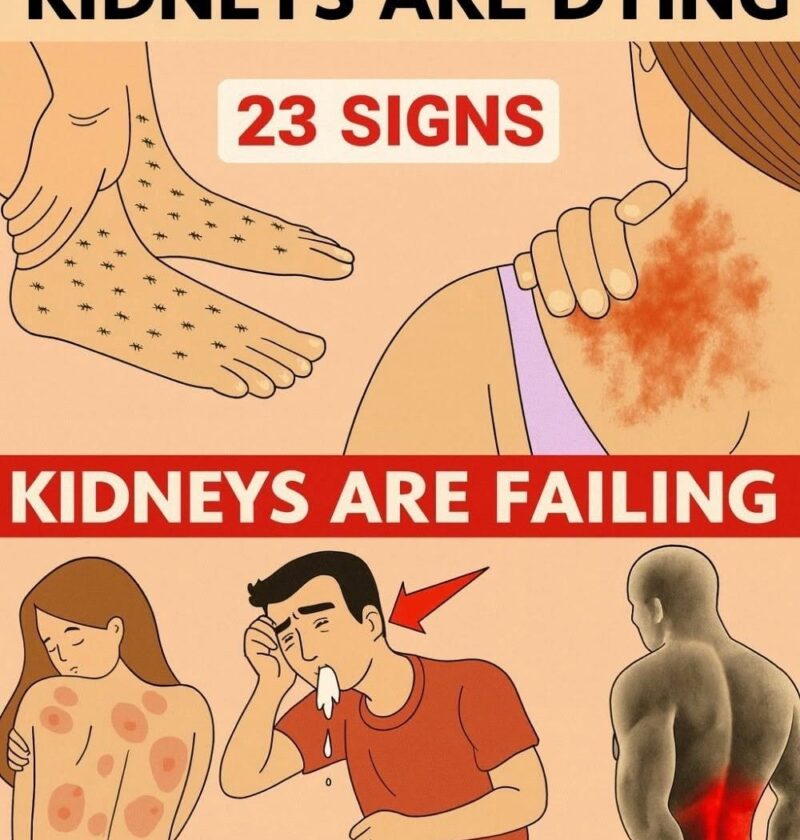
23 “Strange” Signs Your Kidneys Might Be in Trouble
The headline is a little misleading: many kidney diseases cause no symptoms in their early stages. In fact, blood and urine testing is often the only way to detect kidney disease early.
N
NIDDK
+1
Possible signs—particularly when several occur together—include:
Swelling of the ankles, feet, legs, hands, or face
Puffiness around the eyes, especially in the morning
Foamy or unusually bubbly urine
Blood or pink/cola-colored urine
Urinating more frequently, particularly at night
A noticeable decrease in urine output
Fatigue or reduced energy
Difficulty concentrating or “brain fog”
Trouble sleeping
Muscle cramps, especially at night
Persistent itching
Dry or unusually darkened skin
Loss of appetite
Nausea or vomiting
Unexplained weight loss
Shortness of breath
Chest discomfort or pain
New or worsening high blood pressure
Numbness or tingling
Changes in urination pattern
Persistent weakness
Unexplained fluid-related weight gain
In advanced disease, confusion or marked drowsiness
These symptoms are not specific to kidney disease. For example, frequent nighttime urination can have many causes, while fatigue and muscle cramps are also common in numerous other conditions. NIDDK lists swelling, foamy urine, changes in urination, itching, cramps, fatigue, nausea, concentration problems, and shortness of breath among possible symptoms of more advanced CKD.
N
NIDDK
+1
The tests that matter most
If you’re concerned about your kidneys, don’t rely on symptoms alone. Two important tests are:
eGFR: a blood test estimating how well your kidneys filter blood.
Urine albumin-to-creatinine ratio (uACR): detects protein leaking into the urine.
An eGFR below 60 may indicate kidney disease, while a persistent uACR above 30 mg/g can indicate kidney damage; results generally need appropriate clinical interpretation and sometimes repeat testing.
N
NIDDK
Who should be especially careful?
People with diabetes, high blood pressure, heart disease, or a family history of kidney failure have increased risk and should discuss regular kidney testing with their healthcare professional.
N
NIDDK
+1
Don’t wait for symptoms if you’re at high risk. Early kidney disease can be almost completely silent, and finding it earlier provides more opportunity to slow further damage.
N
NIDDK
N
Sources