How to Pick a Sweet, Ripe Watermelon 🍉
There isn’t a 100% foolproof visual test for sweetness, because you can’t see the sugar content from the outside. But several signs can help you choose a better-tasting, ripe watermelon.
Look for a large creamy-yellow field spot. This is the patch where the watermelon rested on the ground. A creamy yellow or orange-yellow spot generally indicates it had time to ripen, while a very pale white spot may indicate less time to mature.
Choose a duller-looking rind. A ripe watermelon often has a less shiny, somewhat dull appearance. An extremely glossy rind isn’t necessarily a sign of sweetness.
Look for strong, contrasting stripes. Clear contrast between the dark and light green areas can be a useful maturity clue, although stripe pattern alone doesn’t guarantee sweetness.
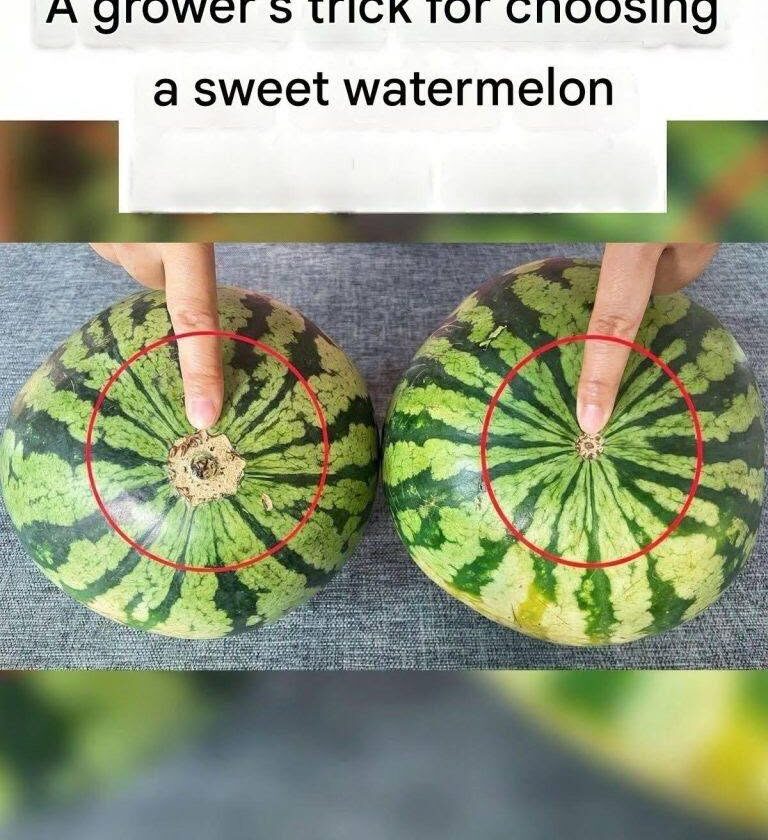
Check the stem if it’s visible. A dry, brownish stem can indicate maturity. A green stem may mean the fruit was harvested relatively recently, although this isn’t a definitive sweetness test.
Pick it up. A watermelon should feel heavy for its size, which generally indicates good water content and can be a useful sign of a juicy fruit.
Don’t rely on the “webbing” myth. Brown web-like markings are sometimes said to guarantee sweetness, but they aren’t a reliable way to measure how sweet the flesh will be.
The easiest shopping rule
When comparing several similarly sized watermelons, choose one that is heavy, has a large creamy-yellow field spot, and has a dull, healthy-looking rind.
And remember: watermelon generally doesn’t become significantly sweeter after harvesting, so choosing a properly mature fruit at the market matters.