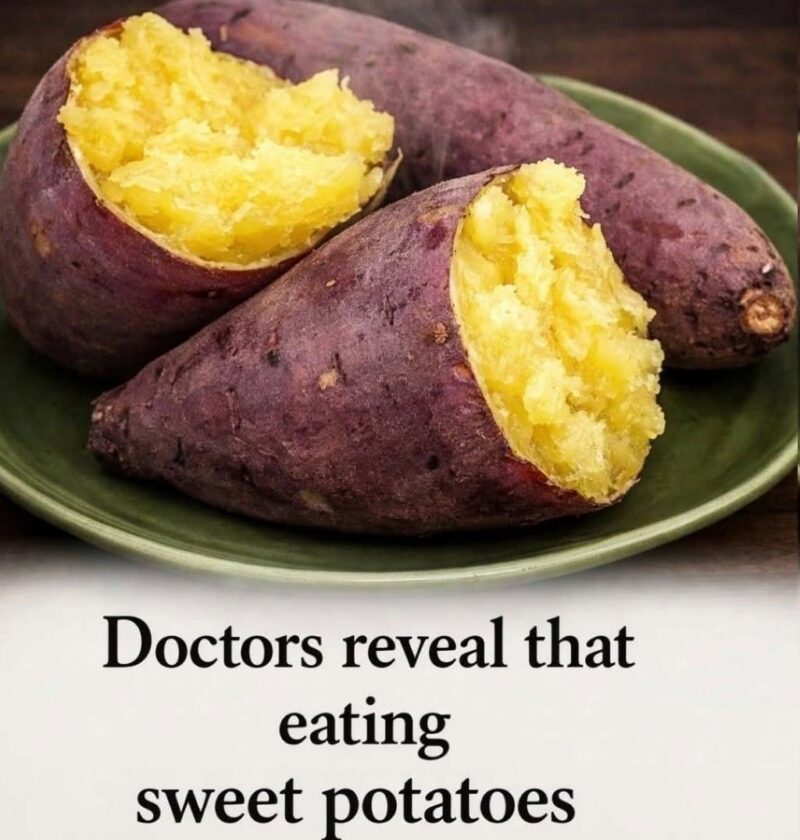
Doctors Reveal What Eating Sweet Potatoes May Do to Your Body 🍠
Sweet potatoes are a nutritious food, but they aren’t a miracle cure. They provide beta-carotene, fiber, potassium, vitamin C, and vitamin B6, with orange varieties particularly rich in beta-carotene.
T
The Nutrition Source
+1
Supports eye health: Beta-carotene is converted by the body into vitamin A, which is important for normal vision.
Provides antioxidants: Orange varieties contain beta-carotene, while purple varieties contain anthocyanins.
T
The Nutrition Source
Supports digestion: Their fiber contributes to a healthy digestive system.
Provides potassium: Potassium is an important nutrient for normal muscle, nerve, and cardiovascular function.
Can be filling: Fiber and carbohydrates can make sweet potatoes a satisfying component of a meal.
Can affect blood sugar: Sweet potatoes are still a carbohydrate-rich starchy food. Large portions can raise blood glucose, although their overall nutritional profile makes them a useful choice for many people.
T
The Nutrition Source
+1
What if you have diabetes?
You don’t necessarily need to avoid sweet potatoes. Portion size and preparation matter. Research evidence isn’t strong enough to claim that sweet potatoes themselves treat diabetes, and they can still raise blood sugar.
P
PubMed Central (PMC)
+1
A practical approach is to have a moderate portion and pair it with protein and non-starchy vegetables rather than eating a very large serving by itself.
Bottom line: Sweet potatoes can be an excellent addition to a balanced diet—but claims that they “cure diabetes,” “melt belly fat,” or dramatically lower blood sugar aren’t supported by good evidence.
T
P
Sources