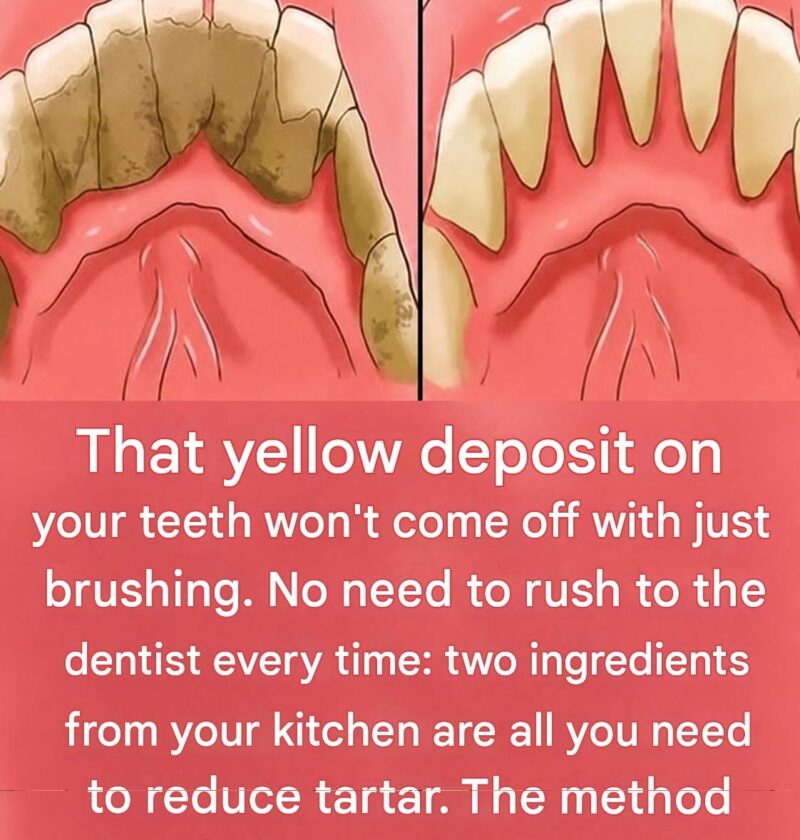
That headline is misleading if it suggests you can safely scrape established tartar off your teeth yourself.
The important distinction: plaque vs. tartar
Plaque is the soft bacterial film that forms on teeth. You can remove it at home with proper brushing and cleaning between your teeth.
Tartar (calculus) is plaque that has hardened through mineralization. Once it has formed, a toothbrush and floss won’t remove it; professional dental instruments are used to remove it.
A
Ada Association
+1
What you can safely do at home
Brush twice a day for two minutes with fluoride toothpaste and a soft-bristled toothbrush.
A
Ada Association
+1
Clean between your teeth once a day using floss, interdental brushes, or another appropriate interdental cleaner. This helps prevent plaque from hardening into more tartar.
A
Ada Association
A therapeutic mouthwash can be an additional aid for some people, but it doesn’t replace brushing and interdental cleaning.
A
Ada Association
If you already have a hard, rough deposit along your gumline, have a dentist or dental hygienist remove it rather than trying to chip or scrape it off yourself.
Don’t try DIY scraping
Using household objects or sharp dental scalers to dig at tartar can injure the gums, damage the tooth surface, or push debris under the gumline. Professional scaling is specifically designed to remove calculus both above and, when necessary, below the gumline.
A
Ada Association
+1
So the truthful version of the headline is:
You can prevent and reduce new tartar buildup at home, but established tartar generally requires professional cleaning to remove safely.
A
Sources