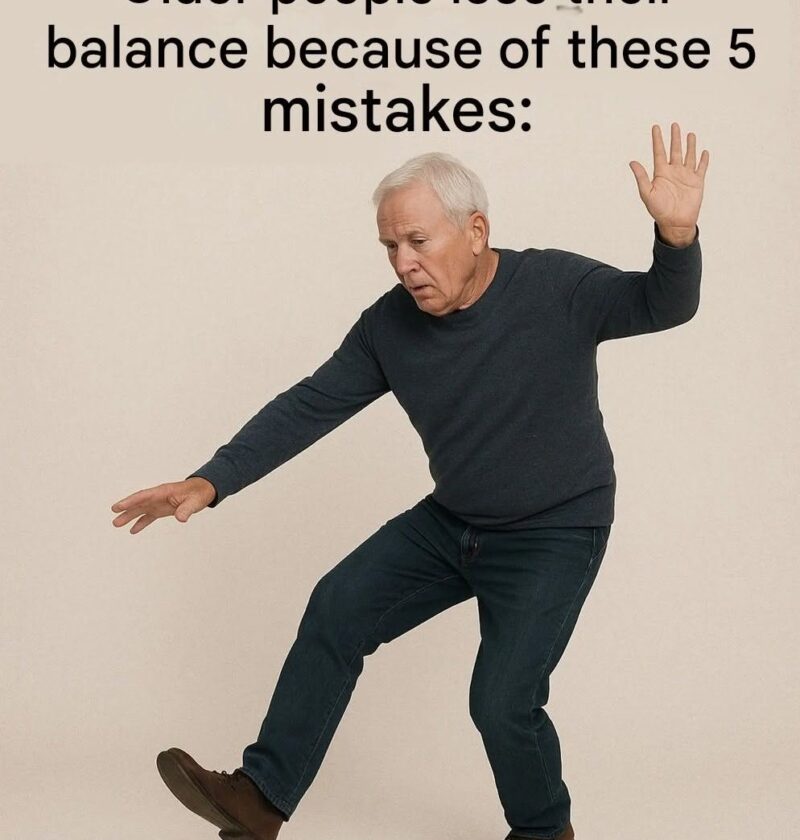
5 common mistakes that can increase balance and fall risk in older adults
Losing balance isn’t necessarily an unavoidable part of aging. Several everyday habits and health issues can increase the risk of falls, and many are modifiable.
N
National Institute on Aging
+1
Standing up too quickly — Blood pressure can briefly drop when you rise from a chair or bed, causing dizziness or unsteadiness. Get up slowly and pause before walking.
N
National Institute on Aging
Wearing unsafe footwear — Loose slippers, backless shoes, smooth soles, and high heels can make you less stable. Supportive, nonslip shoes are generally safer.
N
National Institute on Aging
Ignoring medication side effects — Some medicines can cause dizziness, sleepiness, blurred vision, or confusion. Have your medications reviewed by a doctor or pharmacist rather than stopping anything yourself.
C
CDC Stacks
+1
Letting strength and balance decline — Avoiding physical activity can contribute to muscle weakness and poorer balance. Appropriate strength and balance exercises can help maintain mobility and reduce fall risk.
N
National Institute on Aging
Ignoring vision problems and household hazards — Poor vision, loose rugs, clutter, inadequate lighting, and slippery floors can all contribute to falls. Regular vision checks and simple home modifications can make a meaningful difference.
N
National Institute on Aging
+1
One important warning: New or rapidly worsening balance problems, especially when accompanied by dizziness, weakness, numbness, difficulty speaking, or vision changes, should receive prompt medical evaluation because medical conditions—including stroke—can cause balance problems.
N
National Institute on Aging
N
C
Sources