5 Powerful Ways to Clear a Slow Drain
If a drain is slow but not completely blocked, you can often clear it yourself without calling a plumber.
Flush with hot water
Slowly pour a kettle or large pot of hot (not necessarily boiling) water down the drain. This can help dissolve soap, grease, and other buildup. For PVC plumbing, avoid repeatedly pouring boiling water unless the manufacturer or plumbing guidance says it’s appropriate.
Try a plunger
Add enough water to cover the plunger’s cup, create a tight seal, and pump firmly 10–20 times. For a sink with an overflow opening, cover the opening with a damp cloth while plunging.
Use baking soda and vinegar
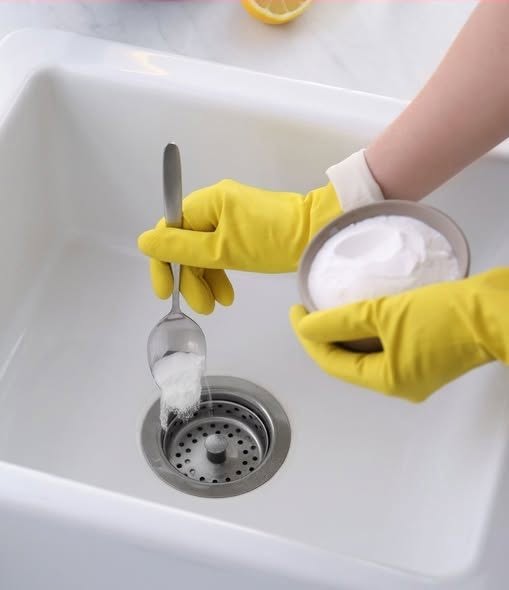
Pour about ½ cup baking soda into the drain, followed by ½ cup vinegar. Cover the opening and let it fizz for about 10–15 minutes, then flush with hot water. This may help with minor organic buildup, although it isn’t a substitute for mechanical removal of a serious clog.
Clean the drain trap
For a sink, place a bucket underneath the P-trap, unscrew it carefully, and remove accumulated hair, food, grease, or sludge. Reassemble it securely and check for leaks.
Use a drain snake or zip tool
A small hand auger or plastic drain-cleaning tool can physically pull hair and debris out of the drain. This is often more effective than chemical cleaners for hair-related blockages.
One important safety rule
Never mix commercial drain cleaners with vinegar, bleach, ammonia, or another drain cleaner. Dangerous chemical reactions can produce toxic fumes or heat. If you’ve already used a chemical drain cleaner, follow its label instructions and take precautions before opening or working on the plumbing.
If several drains are slow at the same time, sewage is backing up, or the drain repeatedly becomes blocked after cleaning, the problem may be farther down the plumbing system and a plumber may be necessary.