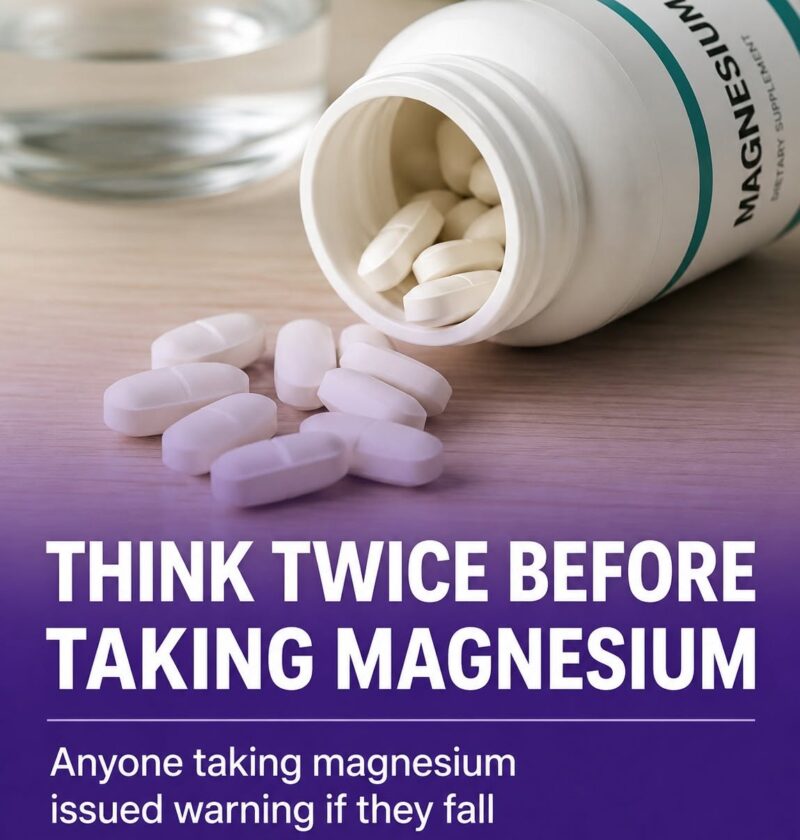
The headline is partly true but oversimplified. Magnesium is an essential mineral, and most people can safely get it from food. The main concern is with magnesium supplements or magnesium-containing medicines, particularly in certain people.
O
Office of Dietary Supplements
+1
The two groups who need particular caution
People with kidney disease or reduced kidney function. The kidneys normally remove excess magnesium. When kidney function is impaired, magnesium can accumulate in the blood, and the risk becomes greater with high-dose supplements or magnesium-containing laxatives/antacids.
O
Office of Dietary Supplements
+1
People taking certain medications. Magnesium can interfere with absorption of some antibiotics and osteoporosis medicines such as oral bisphosphonates. Diuretics and long-term proton-pump inhibitors can also affect magnesium levels.
O
Office of Dietary Supplements
How much is too much?
For adults, the U.S. NIH sets an upper limit of 350 mg per day of magnesium from supplements and medications, unless a healthcare professional recommends otherwise. This limit doesn’t include magnesium naturally present in food. Excess supplemental magnesium commonly causes diarrhea, nausea, and abdominal cramping; extremely high amounts can cause dangerous low blood pressure, abnormal heart rhythms, breathing problems, and cardiac arrest.
O
Office of Dietary Supplements
+1
Magnesium-rich foods—such as nuts, seeds, beans, whole grains, and leafy green vegetables—are generally a safer way to obtain magnesium.
N
National Institute on Aging
If you have kidney problems or take several medicines, don’t start a magnesium supplement without checking with your doctor or pharmacist.
N
NIDDK
+1
O
N
N
Sources