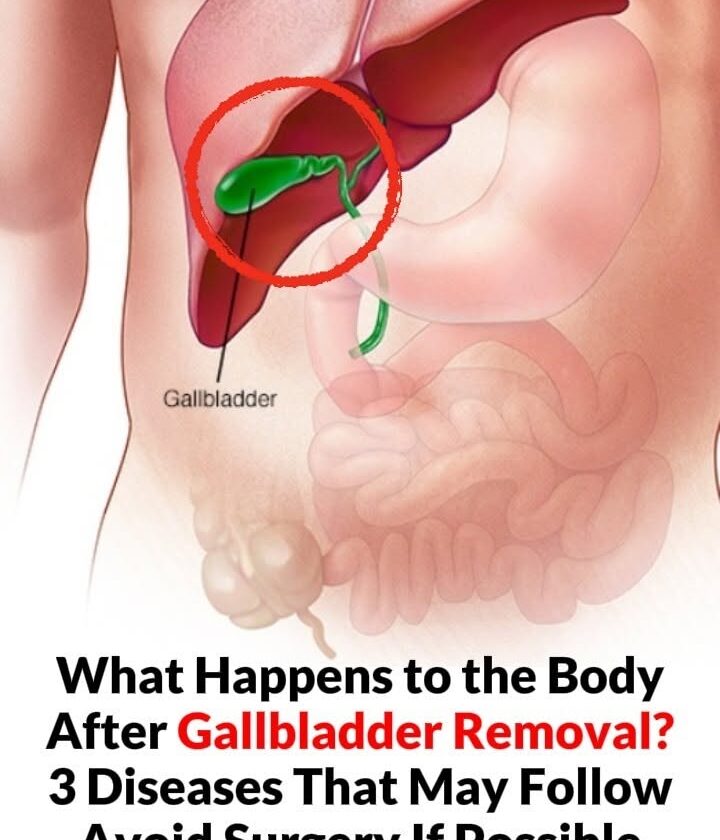
The headline “3 diseases that may follow—avoid surgery if possible” is misleading. Gallbladder removal (cholecystectomy) is generally considered a safe and effective treatment when gallstones are causing significant symptoms or complications. The gallbladder isn’t essential, and most people can live normally without it.
N
NIDDK
+1
What actually changes after removal?
The liver continues to make bile, but instead of storing and concentrating it in the gallbladder, bile flows more continuously into the small intestine. Most people digest food normally afterward.
N
NIDDK
Some people experience:
Diarrhea or looser, more frequent stools, often temporarily. In some people, bile acids reaching the colon can contribute to persistent diarrhea.
M
Mayo Clinic
+1
Bloating, indigestion or abdominal discomfort, which usually improves after surgery.
N
nhs.uk
Rare surgical complications, including bleeding, infection, bile leakage, or injury to the bile duct or nearby organs.
M
Mayo Clinic
+1
Should surgery be avoided?
Not automatically. If someone has silent gallstones that aren’t causing symptoms, treatment often isn’t necessary. But symptomatic gallstones, gallbladder inflammation, stones in the bile duct, or gallstone-related pancreatitis can make removal the appropriate treatment. Untreated gallstones can cause serious complications, including infection and pancreatitis.
N
NIDDK
+1
So there aren’t three inevitable “diseases” that follow gallbladder removal. The decision should be based on why surgery is being recommended, the person’s overall health, and the risks and benefits of surgery versus alternatives.
N
M
N
Sources