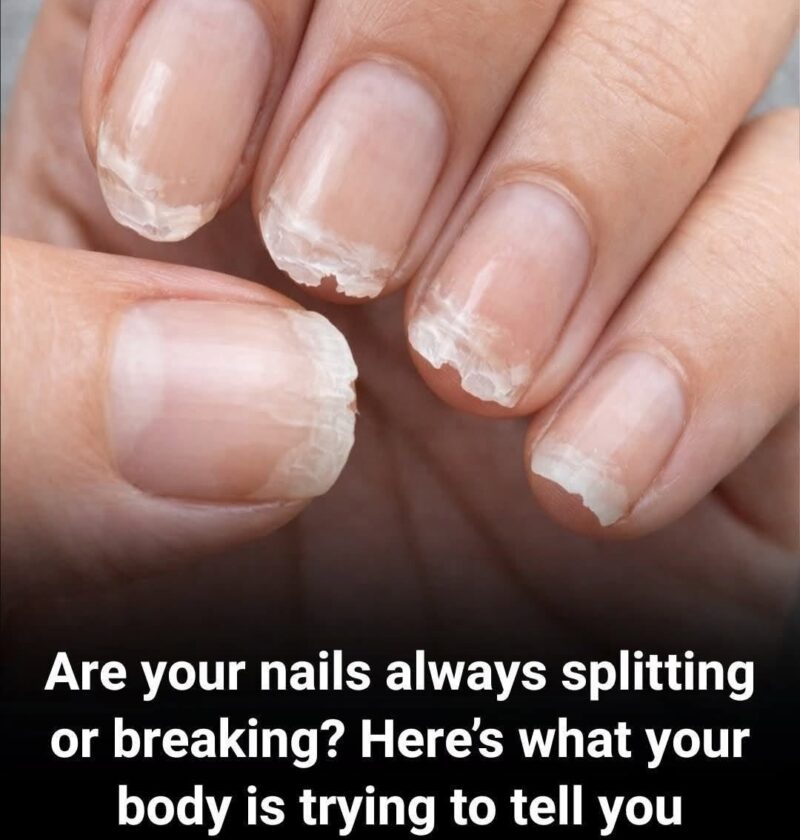
Weak or Brittle Nails: What Your Body May Be Telling You
Brittle, splitting or peeling nails are usually not a sign of one specific disease. Everyday factors—frequent water exposure, harsh soaps or cleaning products, acetone-based polish removers, and manicures—can weaken nails.
A
American Academy of Dermatology
+1
However, persistent nail changes can sometimes provide clues about an underlying problem:
Iron deficiency: Brittle nails can occur with iron-deficiency anemia. Spoon-shaped nails that become thin and dip inward are particularly associated with iron deficiency.
M
Mayo Clinic
+1
Thyroid problems: Thyroid disease can cause nails to become dry, brittle, soft, crumbly, or slow-growing, usually alongside other symptoms such as changes in weight, energy, hair, or sensitivity to cold or heat.
A
American Academy of Dermatology
+1
Fungal infection: Especially in toenails, fungus can cause discoloration, thickening, crumbling, splitting, and lifting of the nail.
A
American Academy of Dermatology
Skin conditions: Psoriasis and some other inflammatory conditions can produce pitting, ridges, discoloration, or changes in nail shape.
A
American Academy of Dermatology
What you can do
Keep nails reasonably short, moisturize your hands and nails regularly, wear gloves when doing prolonged wet work, and limit harsh nail products.
A
American Academy of Dermatology
+1
Don’t automatically start iron or biotin supplements just because your nails are brittle. If the problem is persistent, affects several nails, or occurs along with fatigue, hair loss, weight changes, skin changes, pain, swelling, or unusual nail color, a clinician can determine whether testing is appropriate.
A new dark streak, significant nail lifting, unexplained color change, or rapidly changing nail should be examined by a dermatologist rather than treated as a simple nutritional deficiency.
A
American Academy of Dermatology
A
M
Sources