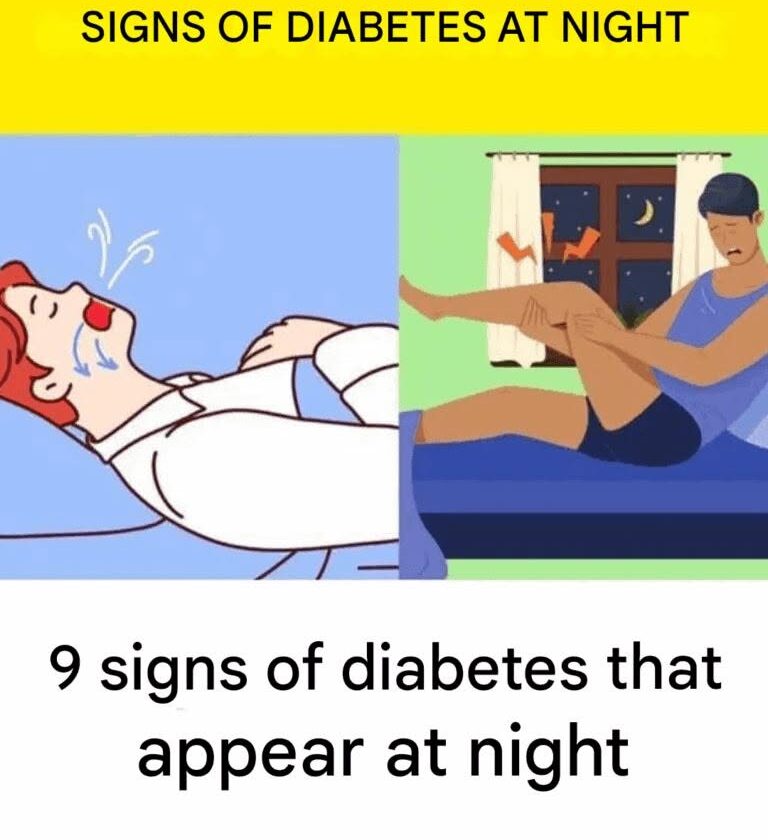
9 Signs of Diabetes That May Be More Noticeable at Night
The headline needs a little context: there isn’t a special set of symptoms that only occurs at night, and type 2 diabetes can exist for years with few or no symptoms. However, some diabetes-related symptoms may become particularly noticeable during the night.
C
CDC Stacks
+1
Waking frequently to urinate — Excess glucose in the blood can lead to increased urination, including at night.
C
CDC Stacks
Strong thirst during the night — Increased urination can contribute to dehydration and excessive thirst.
C
CDC
Dry mouth — High blood sugar can be associated with increased thirst and dry mouth.
C
CDC
Night sweats — In someone taking insulin or certain diabetes medications, sweating can be a symptom of low blood sugar (hypoglycemia). It isn’t a reliable sign of undiagnosed diabetes by itself.
Shakiness or a racing heartbeat at night — These can also occur during hypoglycemia, particularly in people being treated for diabetes.
Hunger or waking up feeling unusually hungry — Blood-glucose disturbances can affect appetite.
Restless or disrupted sleep — Diabetes is associated with several sleep problems, although disrupted sleep has many possible causes.
C
CDC Stacks
Leg discomfort or tingling — Diabetes-related nerve damage can cause burning, tingling, numbness, or pain in the feet and legs, sometimes becoming more noticeable at night.
Fatigue the next day — Frequent nighttime urination or other sleep disruption can leave someone tired. Fatigue itself, however, is nonspecific and doesn’t diagnose diabetes.
C
CDC Stacks
Don’t diagnose diabetes from symptoms alone
Symptoms such as thirst, nighttime urination, fatigue, and blurred vision can have many causes. A blood test is needed to diagnose diabetes. And because type 2 diabetes can be silent, feeling fine doesn’t necessarily mean blood sugar is normal.
C
CDC Stacks
If you’re repeatedly waking to urinate and are also very thirsty, losing weight without trying, experiencing blurred vision, or feeling unusually tired, it’s worth discussing diabetes testing with a healthcare professional.
If you have diabetes and wake with sweating, shaking, confusion, or a pounding heart, check your blood glucose if possible and follow your prescribed hypoglycemia plan; severe confusion, seizure, or inability to swallow requires emergency help.
C
C
Sources