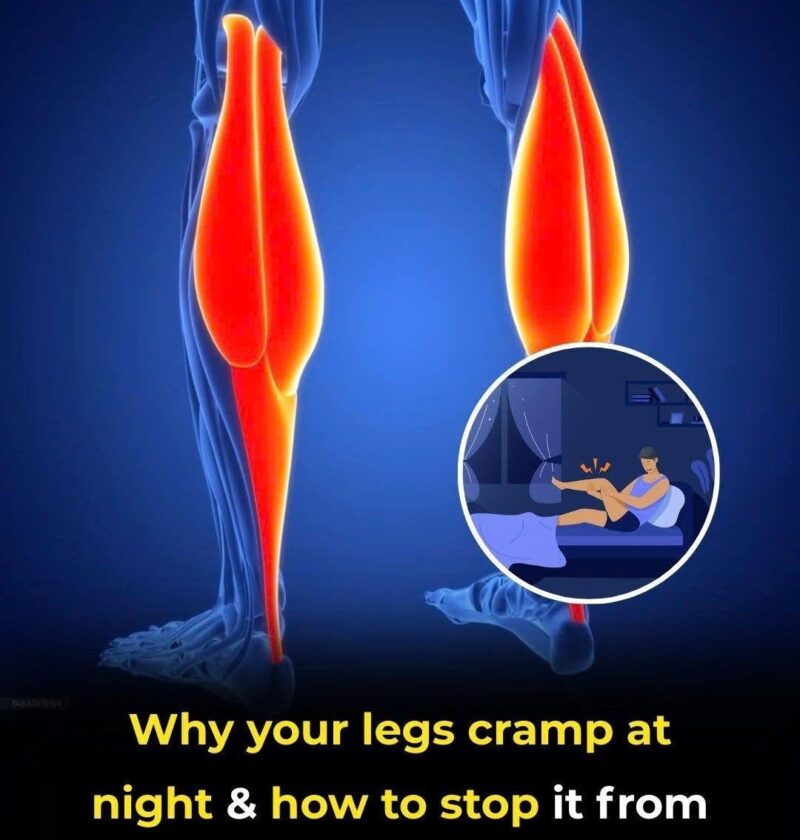
Why Do Leg Cramps Happen While Sleeping?
Nighttime leg cramps—especially sudden, painful tightening of the calf—are very common and usually harmless. In many cases, there isn’t one identifiable cause. They become more common with age.
M
Mayo Clinic
+1
Common reasons
Muscle fatigue or overuse — especially after more walking, exercise, or prolonged standing than usual.
Dehydration — inadequate fluid intake can contribute.
Long periods of sitting or inactivity.
Certain medications — including some diuretics and medicines used for blood pressure or cholesterol. Don’t stop a prescribed medicine without discussing it with your clinician.
M
Mayo Clinic
+1
Pregnancy, particularly later in pregnancy.
Nerve problems such as diabetic peripheral neuropathy.
Kidney disease or circulation problems can sometimes contribute.
Thyroid and other metabolic conditions may occasionally be involved.
M
Mayo Clinic
Interestingly, many nighttime cramps have no known underlying disease at all. Researchers believe tired muscles and abnormal nerve activity may play a role.
M
Mayo Clinic
+1
What to do when a cramp strikes
For a calf cramp, gently straighten the leg and pull your toes toward your face. Standing and putting weight on the affected leg, gentle massage, or walking around can also help.
M
Mayo Clinic
+1
How to reduce them
Stay adequately hydrated.
Gently stretch your calves before bed.
Keep physically active without suddenly overworking the muscles.
Consider a few minutes of gentle cycling before bedtime.
Keep heavy blankets from pressing tightly against your feet.
M
Mayo Clinic
Don’t automatically start magnesium or potassium supplements. Unless you have a deficiency or another reason to take them, supplements aren’t a guaranteed solution, and excessive amounts can be harmful.
When to get checked
Talk with a healthcare professional if cramps regularly disturb your sleep, last more than about 10 minutes, or occur with leg swelling, numbness, persistent pain, muscle weakness, or muscle loss.
N
nhs.uk
+1
Bottom line: Night cramps are usually caused by muscle/nerve factors rather than a dangerous disease. But frequent or new cramps—especially with other symptoms—deserve an evaluation rather than assuming you simply need more vitamins or minerals.
M
N
Sources