Small White Spots on Your Arms or Legs: What Could They Be?
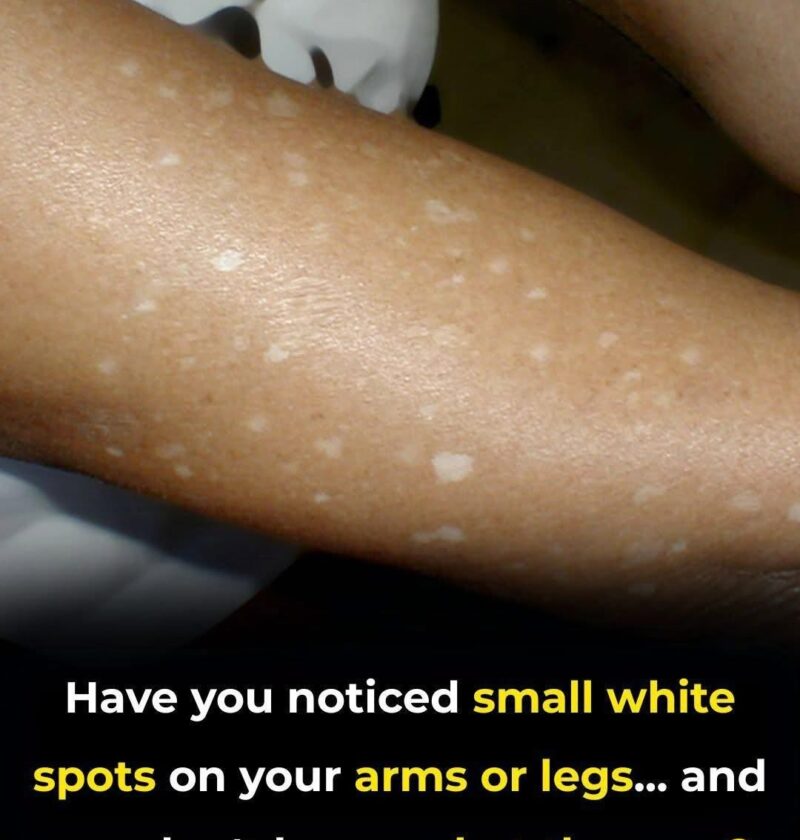
If you’re noticing tiny, flat white or pale spots on your forearms or lower legs, particularly as you get older, one common possibility is idiopathic guttate hypomelanosis (IGH). It’s a benign skin condition in which areas of skin lose some of their melanin.
C
Cleveland Clinic
+1
Typical IGH spots are:
Small—often just a few millimeters across.
Round, oval, or slightly irregular.
Smooth and usually not itchy or painful.
Most common on sun-exposed forearms and shins.
More common with increasing age and cumulative sun exposure.
C
Cleveland Clinic
+1
Is it dangerous?
Usually, no. IGH itself is harmless and generally doesn’t require treatment. However, other conditions—including vitiligo, fungal infections, and some inflammatory skin disorders—can also produce light-colored patches, so appearance alone isn’t enough for a definite diagnosis.
D
DermNet
+1
Can you make them disappear?
There’s no proven home remedy that reliably restores the pigment. Sun protection can help prevent additional sun-related skin changes. If the spots are cosmetically bothersome, a dermatologist can discuss treatments such as topical medicines or procedures, although results vary.
C
Cleveland Clinic
+1
Don’t use vinegar, lemon juice, bleach, or abrasive scrubs to try to remove them. Irritating the skin can cause burns or additional pigment changes.
If the spots are rapidly spreading, changing, scaly, inflamed, or accompanied by other symptoms, have them examined by a dermatologist.
Bottom line: Tiny white spots on older adults’ arms and legs are often idiopathic guttate hypomelanosis—a harmless pigment change associated with aging and sun exposure—but a clinician should confirm the diagnosis if you’re uncertain.
C
D
Sources