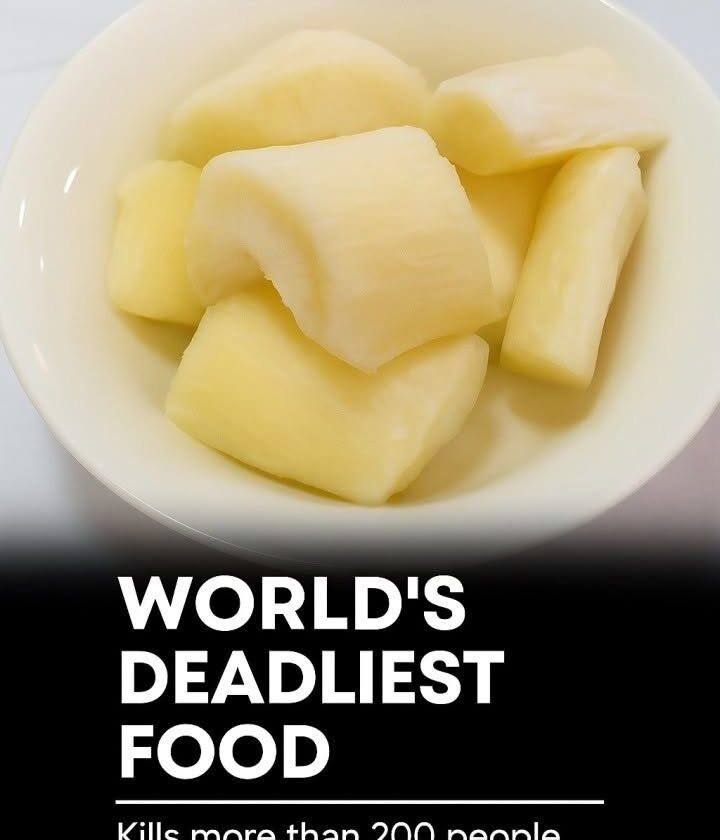
That headline is referring to cassava (also called manioc or yuca), a staple food for hundreds of millions of people.
🌱 What is cassava?
Cassava is a starchy root crop grown widely in:
- Africa
- South America
- Asia
It is a major source of calories for many communities because it grows well in poor soil and drought conditions.
☠️ Why it’s called “dangerous”
Cassava contains natural chemicals called cyanogenic glycosides, which can release cyanide if the root is:
- Not properly processed
- Eaten raw
- Improperly cooked
Risks:
- Acute poisoning (in extreme cases)
- Chronic exposure can contribute to neurological issues if consumed incorrectly over long periods
⚠️ Why people still eat it safely
Despite the risks, cassava is safe when properly prepared. Traditional methods remove toxins, such as:
- Soaking
- Fermenting
- Drying
- Thorough cooking
Millions of people consume it daily without harm because preparation methods are well-established.
🧠 Why deaths are relatively rare
The reported deaths (often cited around 200+ per year) typically occur when:
- People eat bitter cassava varieties improperly processed
- Food shortages force unsafe preparation methods
- Lack of awareness about detoxification steps
🌍 Important context
Cassava is not “dangerous food” in itself—it is:
- A critical food security crop
- One of the most important sources of carbohydrates in the tropics
- Safer than many processed foods when prepared correctly
✔️ Safer takeaway
Cassava is safe when:
- Peeled properly
- Soaked or fermented when required
- Cooked thoroughly
🧠 Bottom line
Cassava is not a “deadly food” in normal use. The risk comes from improper preparation, not the food itself. When processed correctly, it is a safe and essential staple for hundreds of millions of people.