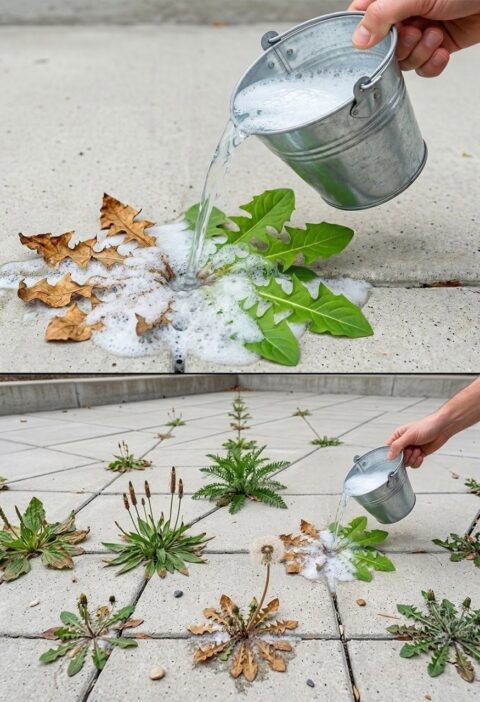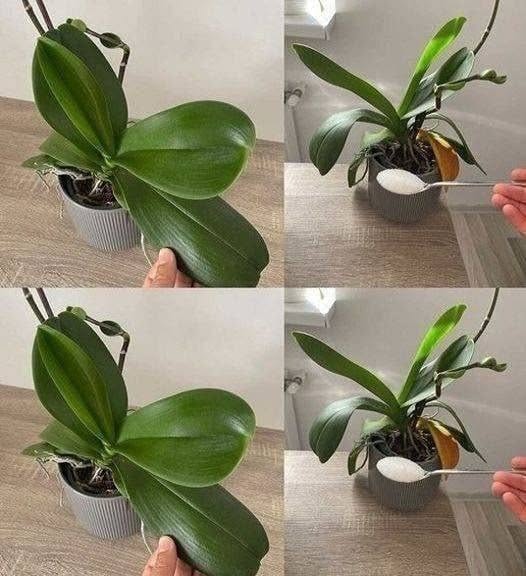
This is another example of an over-simplified gardening claim that isn’t reliably true.
Why the “1 tablespoon = continuous blooming orchids” claim is misleading
Orchids (especially common ones like Phalaenopsis) don’t bloom continuously just because of a single fertilizer dose. Blooming depends on several factors:
- Light (most important factor)
- Temperature changes (often a day/night difference triggers blooming)
- Proper watering cycle
- Rest period after flowering
- Overall plant health and age
About fertilizer
Orchids do need fertilizer, but:
- There is no universal “one tablespoon” rule
- Too much fertilizer can actually burn roots and prevent blooming
- Most orchid growers use a very diluted fertilizer (¼ to ½ strength)
- Often applied weekly or biweekly during active growth, not as a one-time dose
A common safe guideline is the “weakly, weekly” approach rather than a strong single feeding.
The truth behind viral gardening advice
Claims like “one tablespoon makes them bloom continuously” usually:
- Ignore plant biology
- Oversimplify nutrition needs
- Or assume perfect growing conditions that most homes don’t have
Bottom line
Fertilizer can help orchids bloom, but it’s only one small part of a larger care system. No single dose or “miracle amount” guarantees continuous flowering.
If you want, tell me what type of orchid you have, and I can give you a simple, reliable blooming routine for it.