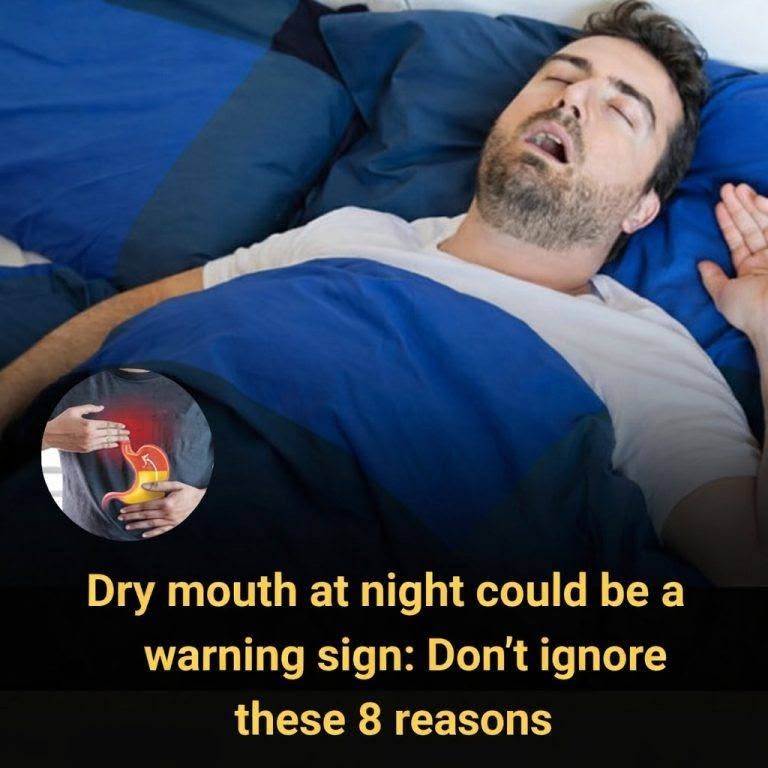
That headline is partly mixing a real symptom with overhyped “warning sign” framing.
What dry mouth at night actually is
Dry mouth (also called xerostomia) happens when your salivary glands don’t produce enough saliva during sleep.It’s very common and often harmless, especially if it happens occasionally.
Common (usually harmless) causes
- Sleeping with your mouth open (often from nasal congestion)
- Dehydration
- Dry air or air conditioning
- Snoring or sleep-related breathing issues
- Alcohol or caffeine before bed
- Certain medications (antihistamines, antidepressants, blood pressure drugs)
Possible “warning signs” (when to pay attention)
Dry mouth itself isn’t usually dangerous, but it can sometimes point to an underlying issue if it is:
- Persistent and severe
- Accompanied by constant thirst and frequent urination (possible diabetes)
- Linked with loud snoring, choking, or daytime sleepiness (possible sleep apnea)
- Associated with mouth sores, bad breath, or dental decay
- Combined with dry eyes or joint pain (possible autoimmune conditions)
When to be concerned
Consider seeing a doctor or dentist if:
- It happens most nights for weeks
- You wake up choking or gasping
- You have frequent cavities or gum problems
- It’s affecting sleep quality significantly
Simple ways to reduce it
- Drink water earlier in the evening (not excessive right before bed)
- Use a humidifier in dry rooms
- Treat nasal congestion if present
- Avoid alcohol and smoking before sleep
- Try nasal breathing support if needed (like saline spray)
Bottom line
Nighttime dry mouth is common and usually benign, often related to breathing habits or environment—not a mysterious disease warning. Viral “8 warning signs” lists tend to exaggerate normal symptoms into alarm signals.
If you want, tell me your situation (snoring, meds, mouth breathing, etc.), and I can help narrow down the most likely cause.