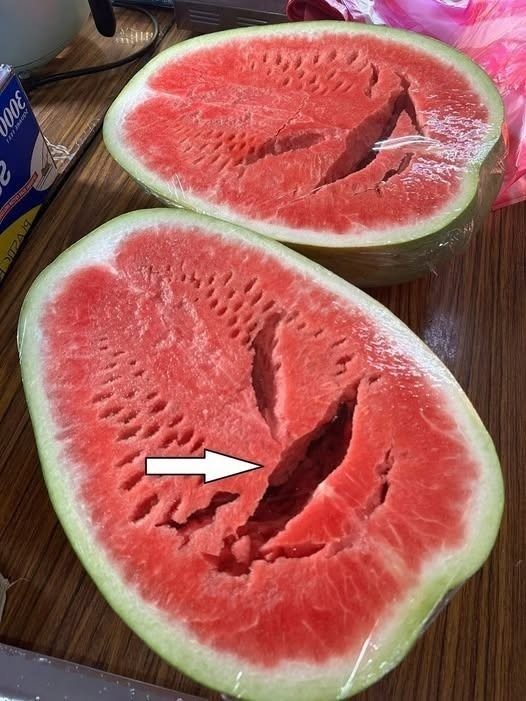
Here’s what it actually means:
Common, harmless reasons
1) Natural growth cracking
Watermelon can develop internal cracks if it:
- Grows too fast after heavy watering or rain
- Experiences uneven irrigation
- Expands faster than its internal flesh can keep up
This is called physiological cracking and is common in many fruits.
2) Overripe watermelon
As watermelon gets very ripe:
- Flesh becomes softer and can separate slightly
- Small internal fissures may appear
This affects texture more than safety.
3) Sugar accumulation differences
Uneven sugar distribution can create:
- “Breaks” in the flesh structure
- Grainy or split-looking areas
When you SHOULD worry
Do not eat it if you notice:
- Sour or fermented smell
- Slimy texture
- Mold (white, green, or black spots)
- Gas bubbles or fizzing (sign of fermentation)
- Off taste
These indicate spoilage, not just cracking.
Important reality check
Cracks inside a watermelon are usually a quality issue, not a safety warning. Viral posts exaggerate this to create fear.
Bottom line
A cracked watermelon is most often just the result of rapid growth or ripening, not a sign of something toxic or dangerous. But always trust your senses—smell, texture, and taste are more reliable than appearance alone.
If you want, I can also tell you how to pick a perfectly ripe watermelon so you avoid this issue altogether.