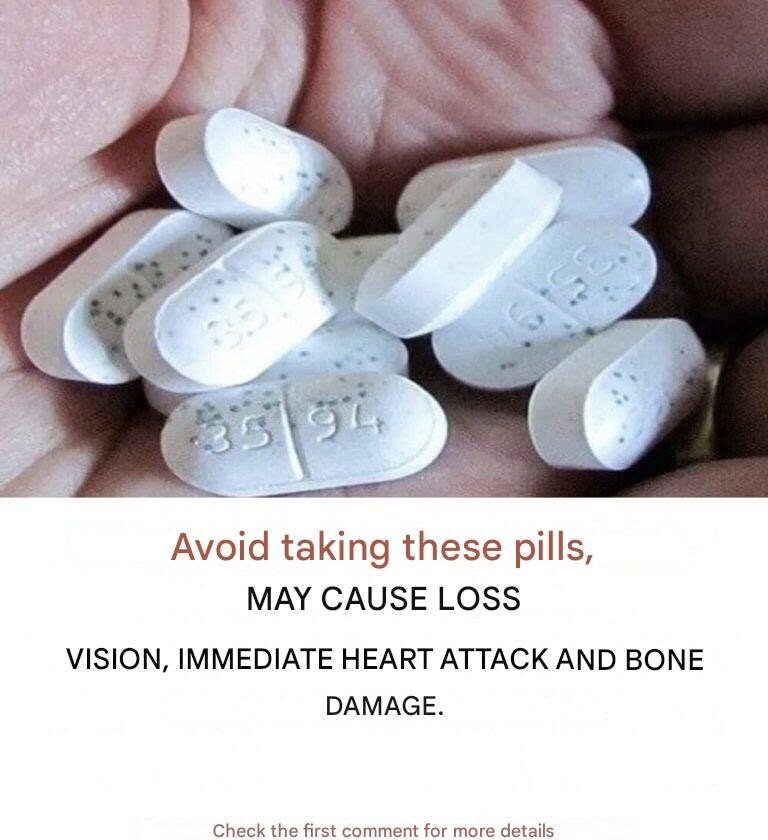
That kind of warning headline is very alarmist and often misleading unless it names a specific medication and the risk is confirmed by clinical data.
Key point first
“Tablets that cause blood clots, thrombosis, and heart attacks” is not a meaningful general statement. Risk depends entirely on the exact drug, dose, and patient health conditions.
When medicines can increase clot or heart risk
Some specific categories are known to carry higher risk in certain people:
1. Hormonal medicines
Combined oral contraceptive pill
- Can slightly increase risk of blood clots (deep vein thrombosis)
- Risk is higher in smokers, older women, or those with clot history
2. Certain hormone therapies
Testosterone therapy
- May increase red blood cell count in some cases
- Can raise cardiovascular risk in specific populations
3. Some anti-inflammatory drugs (long-term/high dose)
Ibuprofen and similar NSAIDs
- Linked to slightly increased risk of heart attack or stroke with long-term/high-dose use in some patients
- Risk is generally low for short-term use in healthy individuals
4. Cancer and immune-related drugs
Some specialized therapies (not typical over-the-counter tablets) can increase clot risk as a side effect.
What’s misleading about the headline
- It doesn’t name a specific drug
- It groups unrelated risks together (clots, thrombosis, heart attack)
- It implies all tablets are dangerous, which is false
- It ignores dosage, duration, and patient risk factors
Important reality
Even when risk exists:
- It is usually rare
- It is often dose- or condition-dependent
- Doctors prescribe these drugs because the benefits outweigh risks
When to take such warnings seriously
You should only be concerned if:
- A specific medication is named
- The warning comes from a reliable medical source (regulator, pharmacist, doctor)
- You personally have risk factors (history of clots, smoking, etc.)
Bottom line
This is likely fear-based content without context. The real answer is always:
“Which tablet?” and “for whom?”
If you want, paste the exact medicine name from the post and I’ll tell you the real, evidence-based risk level.