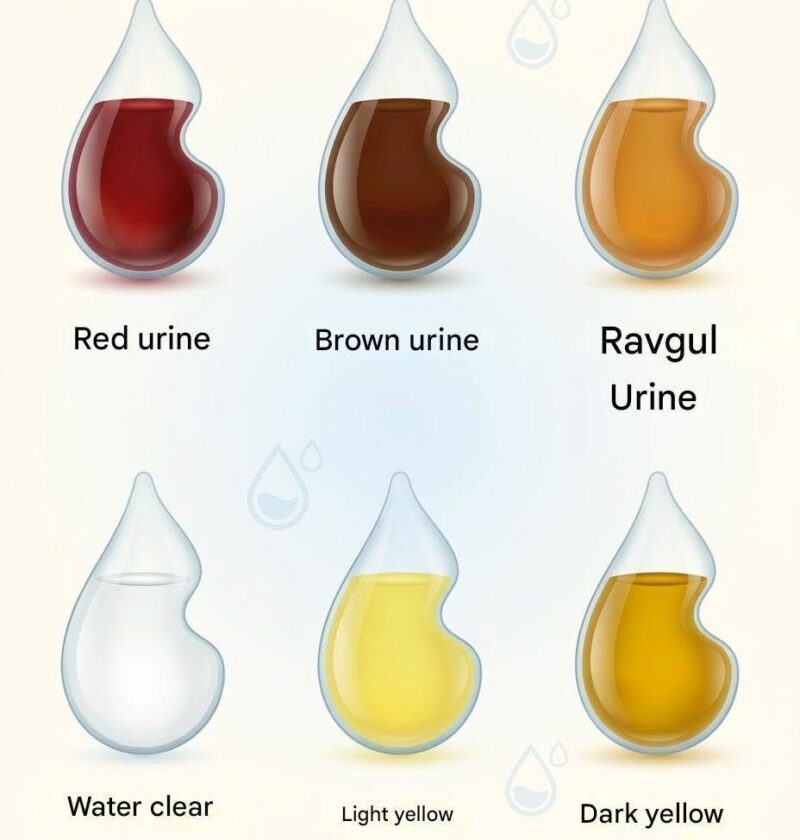
Urine color can provide clues about your hydration, diet, medications, and sometimes your health. While color alone doesn’t diagnose a condition, certain changes are worth paying attention to.
🟡 Pale yellow to light yellow
- Usually normal
- Indicates you’re generally well hydrated.
🚰 Clear
- Often means you’re drinking a lot of fluids.
- Usually not a concern, though consistently clear urine may mean you’re overhydrating.
🟨 Dark yellow or amber
- Often a sign of dehydration.
- Drinking more water usually returns it to a lighter yellow.
🟧 Orange
May be caused by:
- Dehydration
- Certain medications
- Some vitamin supplements (especially B vitamins)
- Less commonly, liver or bile duct problems
🩷 Pink or red
Can result from:
- Foods like beets, blackberries, or rhubarb
- Blood in the urine (from infection, kidney stones, injury, or other conditions)
- Some medications
If you haven’t eaten foods that can change urine color, pink or red urine should be evaluated by a healthcare professional.
🟤 Brown or tea-colored
Possible causes include:
- Severe dehydration
- Certain medications
- Liver disease
- Muscle injury (rare but serious)
Medical evaluation is recommended, especially if it persists.
🟢 Blue or green
Less common, but may be due to:
- Certain medications or dyes
- Some vitamin products
- Rarely, certain infections
⚪ Cloudy or milky
Can be caused by:
- A urinary tract infection
- Kidney stones
- Crystals or minerals in the urine
If it’s accompanied by pain, fever, or burning during urination, seek medical care.
🚨 When to see a doctor
Arrange a medical evaluation if you have:
- Red, pink, or brown urine without an obvious food-related cause
- Persistent cloudy urine
- Pain or burning when urinating
- Fever, back pain, or chills
- Blood in the urine
- A color change that lasts several days without an obvious explanation
Bottom line
For most people:
- Pale yellow = normal.
- Dark yellow = you may need more fluids.
- Red, brown, or persistently unusual colors deserve medical attention, particularly if they’re accompanied by pain, fever, or other symptoms.
If you notice a sudden change in urine color and you’re unsure why, consider recent foods, medications, and supplements—but don’t ignore persistent or unexplained changes.