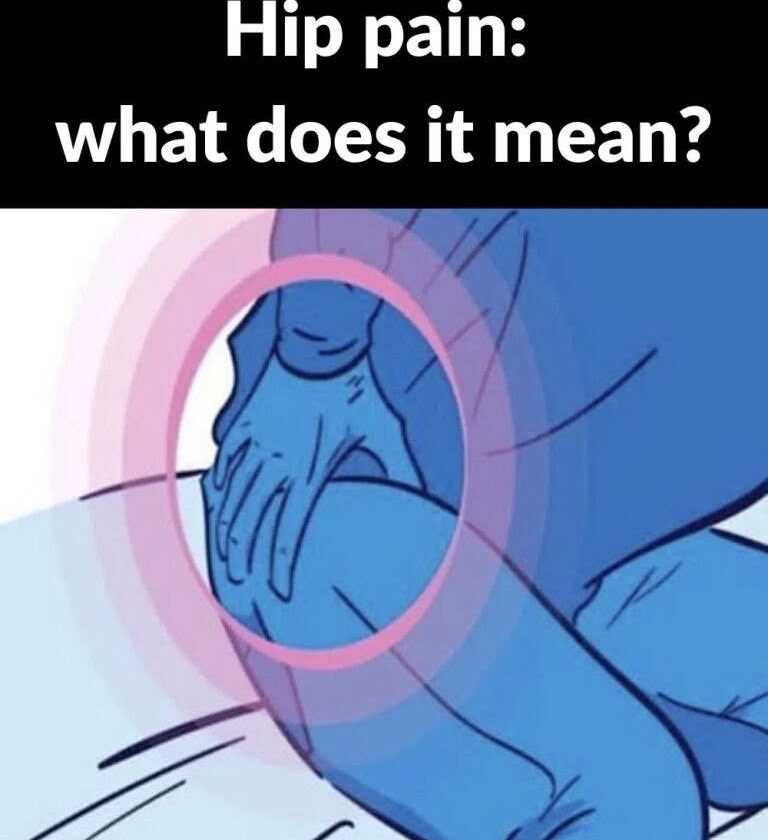
Hip pain can have many different causes, and what it means often depends on where the pain is, how it started, and what makes it worse.
Here are some common possibilities:
- Pain in the front of the hip or groin may come from the hip joint itself, such as Osteoarthritis, a hip labral tear, or a hip flexor strain.
- Pain on the outside of the hip is commonly caused by Greater trochanteric pain syndrome, which can involve irritation of the tendons or bursa.
- Pain in the buttock or back of the hip may be related to the lower back, Sciatica, or muscles around the hip rather than the hip joint itself.
- Pain after a fall or injury could indicate a fracture, dislocation, or muscle or ligament injury.
- Pain with fever, redness, or swelling could indicate an infection and requires prompt medical attention.
Self-care for mild hip pain includes:
- Resting from activities that worsen the pain, but avoiding prolonged bed rest.
- Applying ice for the first 24–48 hours after an injury, then heat may help with muscle stiffness.
- Gentle stretching and gradual return to activity if symptoms improve.
- If appropriate for you, an over-the-counter pain reliever such as Acetaminophen or Ibuprofen may help. Follow the label directions and avoid them if you have reasons they may be unsafe (such as certain kidney disease, stomach ulcers, or allergies).
Seek urgent medical care if you have:
- Severe pain after a fall or accident.
- Inability to bear weight on the leg.
- A deformed hip or leg.
- Fever with severe hip pain.
- Sudden swelling, redness, or warmth of the joint.
Could you tell me:
- Which hip hurts (left, right, or both)?
- Where is the pain (groin/front, side, buttock, or back)?
- How long have you had it, and did it start after an injury?
- How old are you, and does walking, standing, or lying on that side make it worse?