What’s going on with that statement
Phrases like:
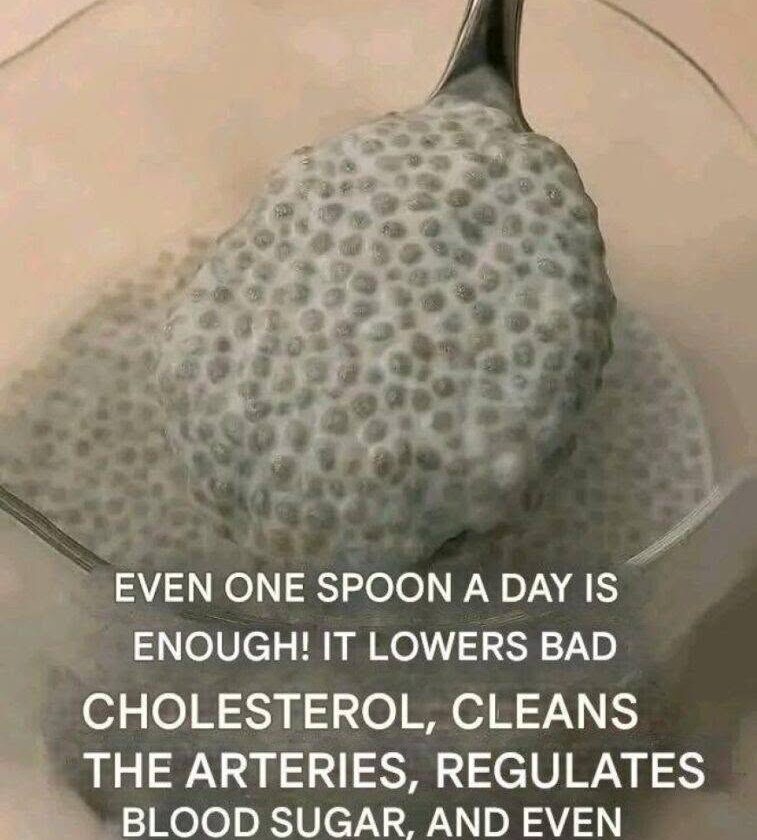
- “one spoonful a day is enough”
- “cleans arteries”
- “regulates blood sugar”
- “suppresses hunger”
…are designed to sound scientific but are not medically precise. In real medicine, effects like these:
- depend on dose, person, diet, and health status
- are usually modest, not dramatic
- never come from a single “magic spoonful” of one ingredient
About the claims themselves
1. “Lowers bad cholesterol”
Some foods (like oats, nuts, olive oil) can modestly improve LDL cholesterol, but:
- only as part of an overall diet pattern (e.g., Mediterranean-style diet)
- not enough to replace medication when needed
2. “Cleans arteries”
This is not how arteries work biologically.
- You don’t “clean” arteries with food.
- Plaque buildup (atherosclerosis) is managed through long-term risk reduction, not detox-style effects.
3. “Regulates blood sugar”
Some ingredients (fiber-rich foods, cinnamon in small studies, etc.) may slightly help glucose control, but:
- effects are small
- diabetes management depends on diet, exercise, and sometimes medication
4. “Suppresses hunger”
Certain foods can increase satiety (fiber, protein, fat), but:
- no single spoonful reliably suppresses appetite long-term
- hunger is regulated by hormones and overall calorie balance
The key issue
This kind of claim usually comes from:
- marketing content
- social media health pages
- “natural cure” influencers
It takes small, real effects and turns them into absolute, guaranteed outcomes.
Bottom line
There is no single spoonful of any ingredient that can reliably:
- fix cholesterol
- clean arteries
- control blood sugar
- suppress hunger
Those outcomes come from consistent lifestyle patterns, not one daily “hack.”
If you want, I can guess what ingredient they were hinting at (there are a few usual suspects like honey mixtures, apple cider vinegar, or seeds) and break down the exact science behind that specific one.