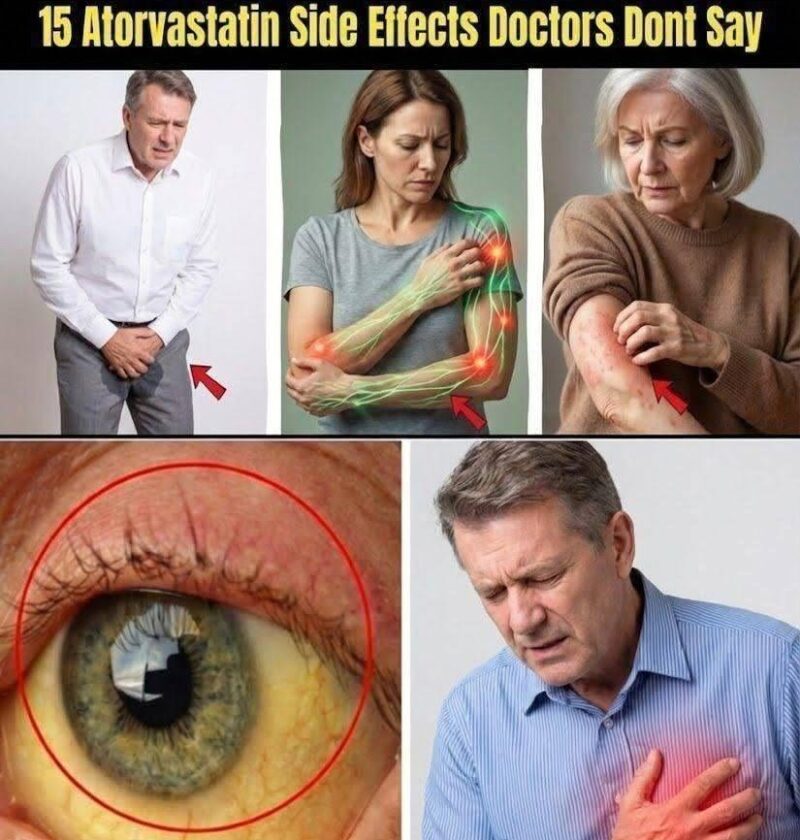
That headline is sensationalized. Atorvastatin is one of the most studied and widely used heart medications, and most people tolerate it well. Like all drugs, it has side effects—but “hidden dangers doctors won’t tell you” is not an accurate framing.
Here are the real, evidence-based side effects and risks:
🟢 Common (usually mild)
- Muscle aches or soreness
- Mild digestive upset (nausea, constipation, diarrhea)
- Headache
These often improve over time or with dose adjustment.
🟡 Less common but important
1. Muscle injury (myopathy)
- Muscle pain with weakness
- Rarely, elevated muscle enzymes
2. Liver enzyme changes
- Mild increases in liver tests can occur
- Serious liver damage is very rare
🔴 Rare but serious
3. Rhabdomyolysis (very rare)
- Severe muscle breakdown
- Can affect kidneys
- Usually occurs with high doses or drug interactions
4. Increased blood sugar risk
- Slight increase in risk of developing Type 2 Diabetes in some people
- Benefit still outweighs risk for most patients at cardiovascular risk
🧠 Possible but less common effects
- Sleep disturbances or vivid dreams
- Mild memory complaints (not clearly proven causal)
- Fatigue
⚠️ Important drug interactions
Risk of side effects increases with:
- Certain antibiotics
- Antifungal medications
- Grapefruit juice (in large amounts)
❤️ Why doctors still prescribe it widely
Atorvastatin:
- Lowers LDL (“bad cholesterol”)
- Reduces risk of heart attack and stroke
- Saves lives in high-risk patients
For most people, benefits far outweigh risks.
🚨 When to contact a doctor
- Unexplained severe muscle pain or weakness
- Dark-colored urine
- Yellowing of skin/eyes
- Severe fatigue or illness feeling
🟢 Bottom line
The “15 hidden dangers” claim is exaggerated. Atorvastatin has known, monitored side effects, most of which are mild or rare, and it remains a first-line, life-saving medication for cardiovascular risk.
If you want, tell me your dose or symptoms, and I can explain whether what you’re feeling is a common side effect or something that needs attention.