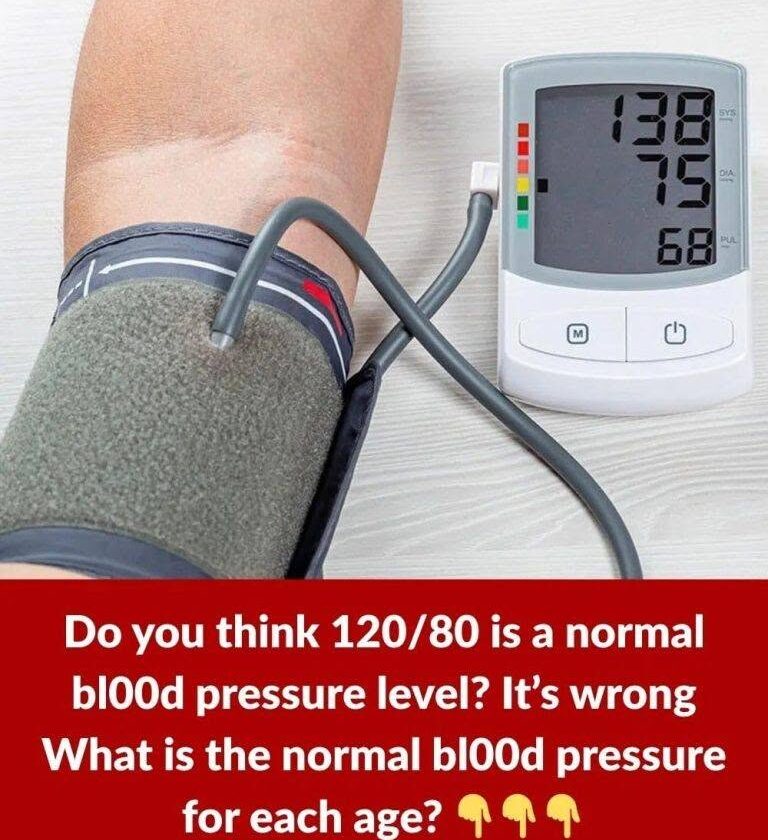
A common misconception is that normal blood pressure changes with age. Current medical guidelines generally use the same target for most adults, regardless of age.
| Age | Normal blood pressure* |
|---|---|
| 18–39 years | Less than 120/80 mmHg |
| 40–59 years | Less than 120/80 mmHg |
| 60+ years | Less than 120/80 mmHg (individual treatment goals may vary) |
*A single reading does not diagnose high blood pressure. Blood pressure naturally varies throughout the day.
Blood pressure categories for adults
| Category | Systolic (top number) | Diastolic (bottom number) |
|---|---|---|
| Normal | Less than 120 | Less than 80 |
| Elevated | 120–129 | Less than 80 |
| High blood pressure (Stage 1) | 130–139 or | 80–89 |
| High blood pressure (Stage 2) | 140 or higher or | 90 or higher |
| Hypertensive crisis | 180 or higher and/or | 120 or higher |
Important notes
- Many older adults can safely aim for blood pressure below 130/80 mmHg, but the ideal target depends on overall health, medications, and whether lowering blood pressure causes dizziness or falls.
- Home blood pressure readings are often more reliable than a single reading taken in a clinic.
- If you consistently have readings of 130/80 mmHg or higher, discuss them with your healthcare professional.
When to seek emergency care
If your blood pressure is 180/120 mmHg or higher and you have symptoms such as:
- Chest pain
- Shortness of breath
- Severe headache
- Vision changes
- Confusion
- Weakness or numbness
seek emergency medical care immediately.
If you’re interested, I can also explain what the two numbers mean, how to measure blood pressure correctly at home, or what blood pressure targets are recommended for people with diabetes, kidney disease, or heart disease.