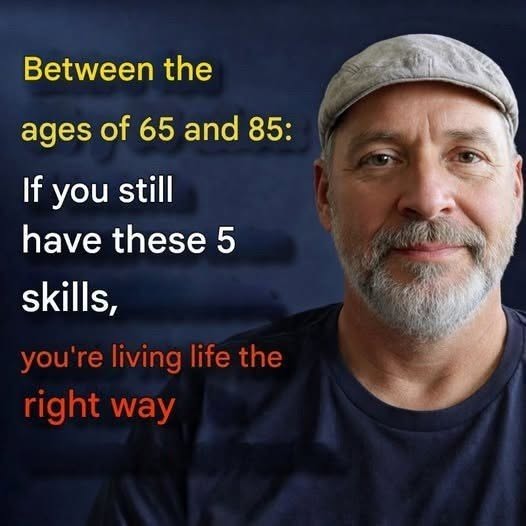
That headline is an oversimplification, but it reflects a real idea: maintaining certain physical and cognitive abilities as you age is associated with healthy aging. There isn’t a scientifically accepted list of “5 skills” that determines whether you’re aging better than most people.
Examples of abilities that often indicate good overall function between ages 65 and 85 include:
- Walking steadily
- Being able to walk at a comfortable pace and maintain balance.
- Good mobility is linked to greater independence.
- Getting up from a chair without using your hands
- This reflects leg strength and balance, which are important for daily activities.
- Remembering and managing everyday tasks
- Keeping track of appointments, medications, and finances suggests preserved cognitive function.
- Maintaining balance
- Standing on one leg for several seconds (if it’s safe to try) can reflect good balance and lower fall risk.
- Staying socially and mentally engaged
- Regular interaction with others and participation in hobbies or learning activities are associated with better overall well-being.
A few important points
- People age differently. Having difficulty with one of these skills doesn’t necessarily mean someone is aging poorly.
- Chronic conditions, injuries, or disabilities can affect these abilities while someone still enjoys a good quality of life.
- Healthy aging is influenced by many factors, including physical activity, nutrition, sleep, management of medical conditions, and social connections.
Bottom line: There is no universal “5-skill test” that proves you’re aging better than others. Instead, preserving mobility, balance, independence, cognition, and social engagement are all positive signs of healthy aging. If someone notices a significant decline in any of these areas, it’s worth discussing it with a healthcare professional, as some causes are treatable.