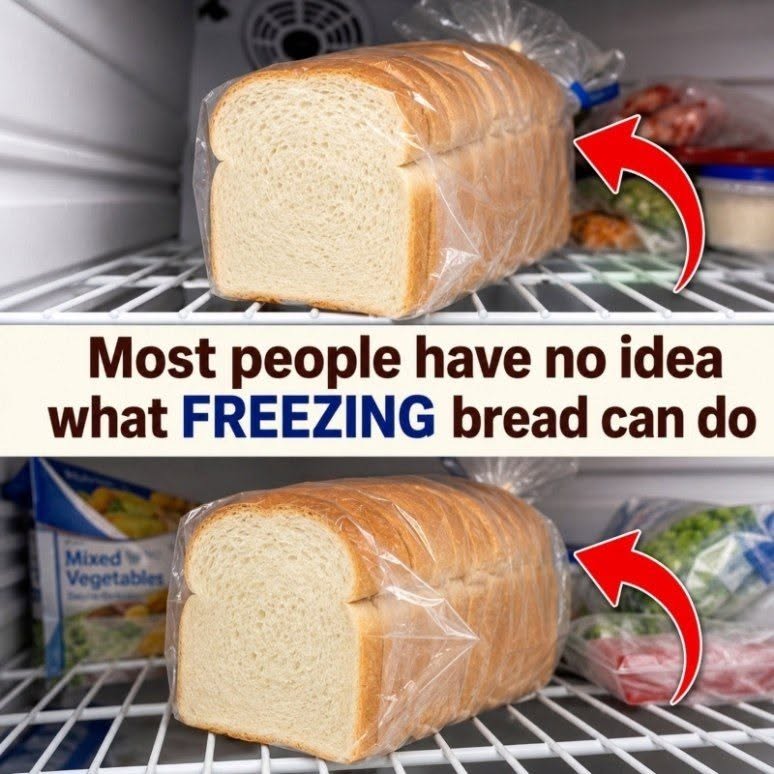
When you throw bread into the freezer, it doesn’t just “pause” in time—it actually changes in a few subtle but important ways.
🧊 What happens inside the bread
Bread is mostly starch, water, and air. When frozen:
- Water turns into ice crystals
The moisture inside the bread freezes. If frozen quickly, the ice crystals stay small; if slowly, they can grow larger and damage the bread’s structure a bit. - Starch aging slows down
Normally bread goes stale because starch molecules slowly crystallize again (called retrogradation). Freezing basically halts this process, so bread stops getting stale while frozen.
🥶 Texture changes after freezing
- If frozen properly, bread keeps its quality surprisingly well.
- If it wasn’t well wrapped, it can suffer freezer burn (dry, tough spots from moisture loss).
- Once thawed, it may feel slightly softer or a bit drier depending on storage.
🍞 What happens when you thaw it
- The ice melts back into water, but the structure isn’t always 100% perfect again.
- Toasting helps a lot—it restores crispness and masks any minor texture changes.
🧠 Interesting fact
Freezing is actually one of the best ways to preserve bread because it:
- Stops mold growth
- Slows staling almost completely
- Keeps flavor relatively intact
👍 Best practice
If you ever freeze bread:
- Slice it first (so you can take out only what you need)
- Wrap it tightly (plastic + bag or airtight container)
- Toast straight from frozen for best results
If you want, I can also explain why refrigerating bread actually makes it go stale faster than freezing it—it surprises a lot of people.