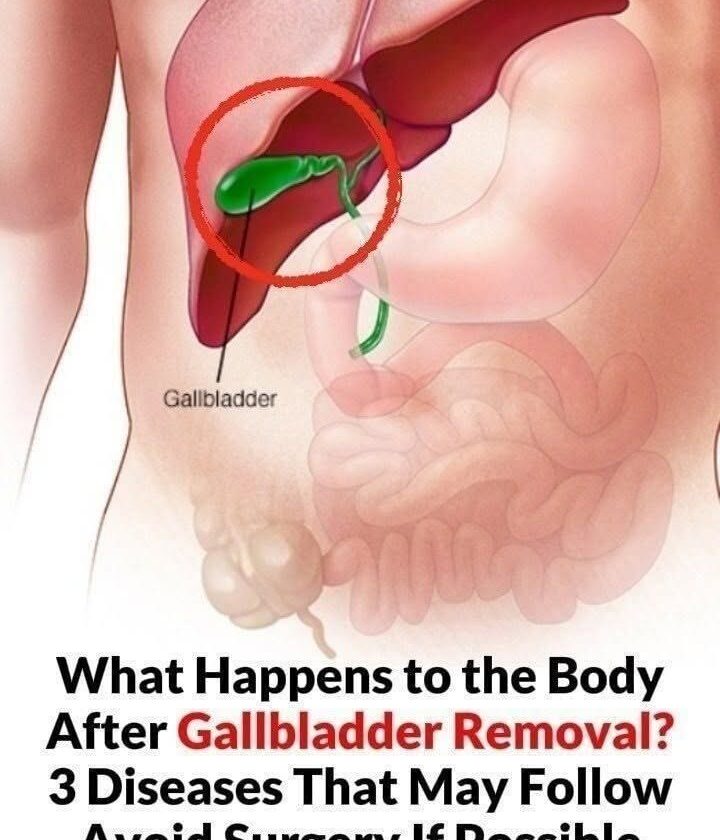
It is not generally something you “avoid when possible” if there is a clear medical indication. The real medical approach is: avoid unnecessary surgery, but proceed when benefits outweigh risks.
What conditions can happen after gallbladder removal?
A small percentage of people experience ongoing digestive issues. These are real but often manageable:
1. Postcholecystectomy syndrome
Some people continue to have symptoms like:
- Upper abdominal discomfort
- Bloating
- Indigestion
- Nausea
This is called Postcholecystectomy syndrome.
It doesn’t mean the surgery “failed”—often it’s due to bile flow changes or unrelated digestive conditions that were present beforehand.
2. Bile acid diarrhea
Without a gallbladder, bile flows more continuously into the intestine instead of being stored and released in bursts. In some people, this can cause:
- Frequent loose stools
- Urgency after eating
- Fatty or greasy stool in rare cases
This is sometimes called bile acid malabsorption-related diarrhea and is treatable with diet changes or medication.
3. Sphincter of Oddi dysfunction (rare)
In a small number of cases, the muscle controlling bile flow can spasm or malfunction, leading to:
- Upper abdominal pain
- Digestive discomfort
- Occasionally elevated liver or pancreatic enzymes
This condition is uncommon and often evaluated carefully before being linked to surgery.
What the “avoid surgery when possible” claim gets wrong
- Untreated gallbladder disease (like Gallstones) can lead to emergencies such as infection or pancreatitis.
- Most people who need surgery experience major symptom relief afterward.
- Long-term complications exist, but they are generally less common and less dangerous than untreated gallbladder disease.
Bottom line
Gallbladder removal is not something to fear or automatically avoid. It is a standard, evidence-based procedure used when gallbladder disease becomes symptomatic or dangerous. Like any surgery, it has possible side effects—but for most patients, the benefits clearly outweigh the risks.
If you want, I can break down who actually qualifies for gallbladder removal vs who can safely manage gallstones without surgery—that’s where this topic usually gets misunderstood.